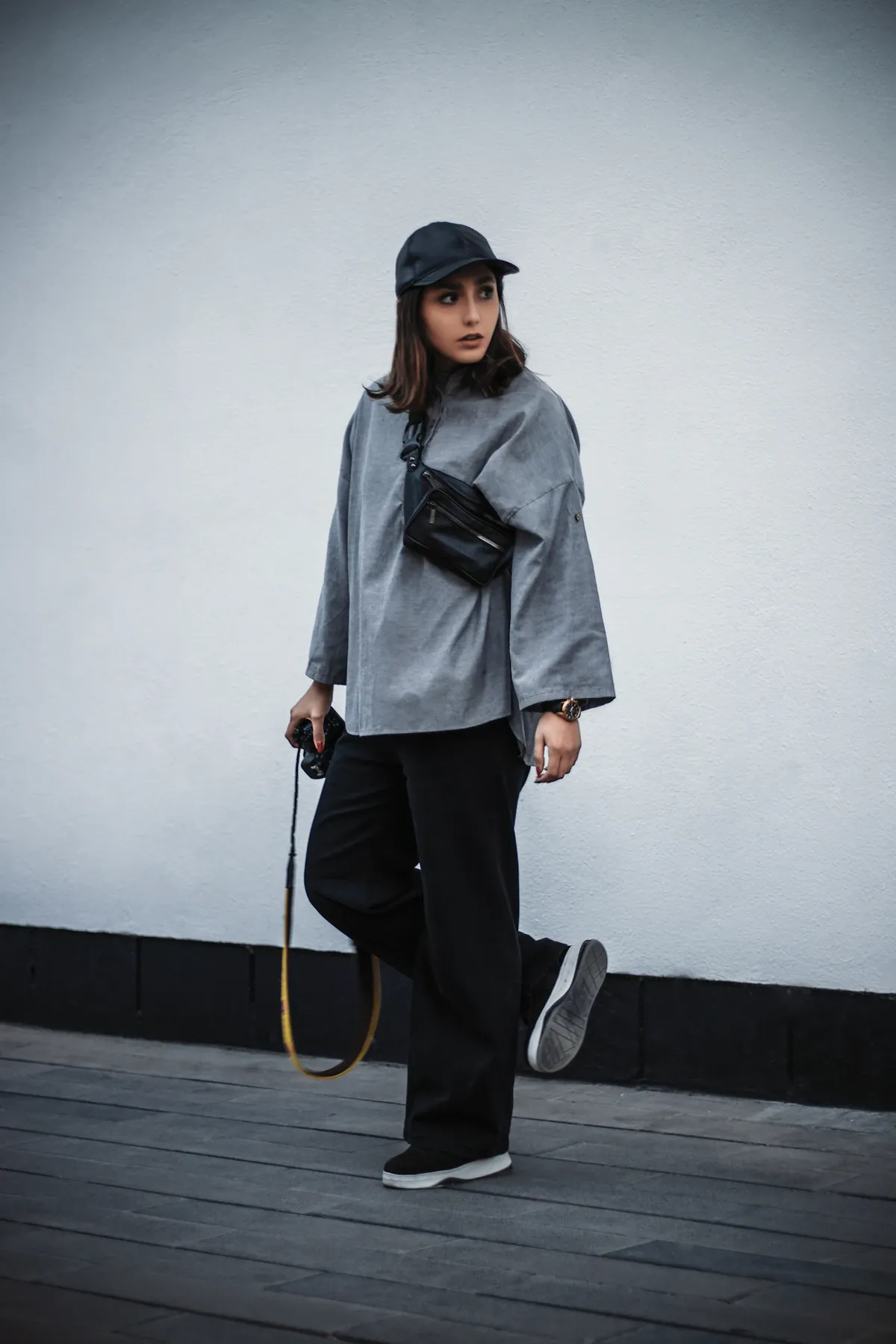
A cap can change a jacket outfit without changing any of the clothes beneath it. Its brim and crown introduce another outline close to the collar, where glasses, hair and a scarf may already be contributing detail. Read that upper group together before deciding the outfit needs more accessories. The useful comparison begins with the cap's real role and a jacket already suitable for the day, rather than a collection of objects assembled only for a street-style photograph.
Give the jacket a settled base
Choose an owned top and lower garment that work independently. Let the jacket opening and collar sit in their ordinary comfortable positions. The indoor outfit should remain useful after the outer layer is removed.
Look at the neckline before adding headwear. A high base and an open shirt create different visible spaces near the face. Keep that existing arrangement clear enough to understand what the cap changes.
Add the actual cap normally
Wear it in the position intended for ordinary use. Notice the size of the brim relative to the collar and the amount of colour visible above the jacket. A cropped portrait can exaggerate that relationship compared with the full outfit.
Do not infer material or protective performance from appearance. Those questions belong to the particular product and its relevant information, separate from the visual decision about shape and colour.
Include the personal accessories already needed
Wear the glasses or other familiar items that belong to the day. Their shapes can add a concentrated cluster of detail even when the colours are quiet. The comparison should describe that real group, not an edited version from which practical items have been removed.
Try the outfit without a prominent necklace or extra scarf first. The cap and collar may already provide the intended interest. Add another piece only where its use or preferred appearance gives it a clear reason to remain.
Step back to the lower outline
Look at the trousers or skirt and suitable footwear from an ordinary distance. The upper group can lead without requiring matching colours at every other point. A quiet lower shape may be enough connection.
Carry the actual bag naturally and check the moment when it is put down. The outfit should not rely on holding an accessory in one precise place to balance the cap. Ordinary movement is a more useful reference than a frozen pose.
Keep a brief private record if the combination is worth repeating, naming the real jacket and base. There is no need to create a universal rule about hats and tailoring. The practical result is one outfit with an understood head-and-shoulder area, where the cap has a useful role and the remaining details can stay as modest as the day allows.
Related reading
A High Neckline Checked beneath the Intended Jacket, How to Layer for a Cold Commute and a Warm Office.