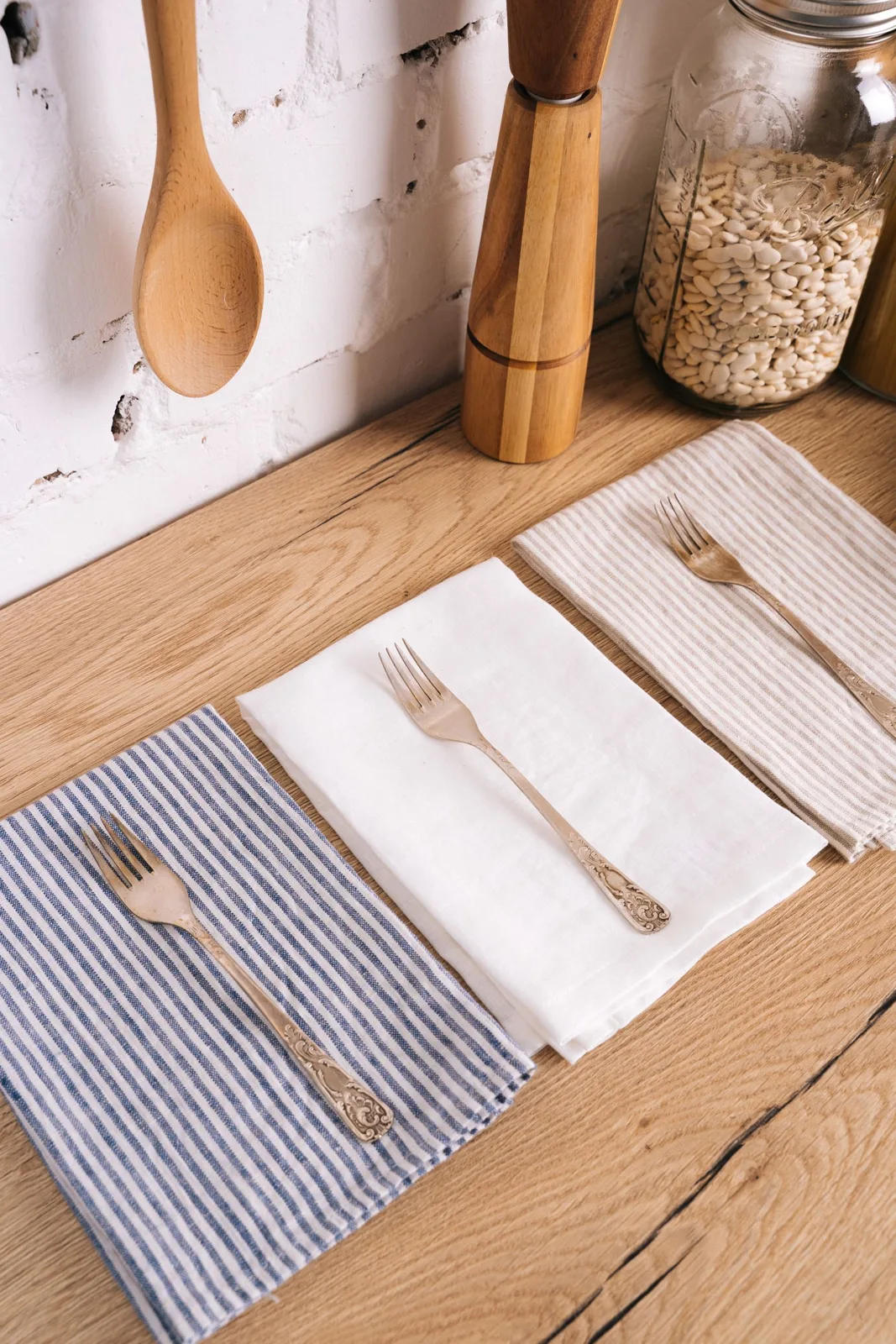
Cloth napkins can be an ordinary part of meals without requiring an elaborate table. Their usefulness depends on size, feel and a laundry routine that suits the household. Begin with the way the table is used, not a folded display. A small practical supply can be enough, and different pieces can work together when they are clean, suitable for the task and easy to return after laundering.
Check the actual dimensions
Read measurements rather than relying on product names or a tightly folded photograph. Try the intended fold with an ordinary place setting. A very large napkin may occupy useful table space when displayed, while a smaller one may suit another preference. Choose for use as well as appearance. Decorative embroidery or trim can be enjoyable but should not make the textile awkward for its main role.
Feel the fabric and read its care
Where possible, assess a sample and check composition, washing and drying guidance. Do not assume every linen-looking material needs the same treatment or that a crisp shop finish will remain without pressing. Decide how much care you want between meals. A more relaxed fold can be intentional when the fabric suits it. The set should not wait unused because its presentation requires more maintenance than the household enjoys.
Count use between laundering
Consider the number of people and the ordinary meal routine rather than buying for the largest possible dinner party. Keep enough suitable clean pieces available without filling a drawer with rarely used duplicates. Follow appropriate care and hygiene guidance for the actual use. Do not treat a decorative basket as a way to hide unready textiles. Keep clean storage distinct from items awaiting laundering.
Make the table arrangement simple
Place the napkin where it is easy to identify and use. A folded piece beside the plate can be enough. Rings, ribbons and complex shapes are optional and add objects to store. Keep food, glasses and comfortable elbow space in view before decorating. A small table can feel considered through clear usable settings rather than through filling every gap with another layer.
Plan the return step
Choose a suitable place for used napkins and follow their care instructions. Make sure they are ready for clean storage before folding or returning them to a drawer. Keep the storage accessible and avoid compressing the supply so tightly that removing one disturbs the whole group. If the set needs particular treatment you repeatedly postpone, use it for a more limited role or choose a routine that is genuinely manageable.
Must all the napkins match?
No. A shared colour family or a simple mix can be deliberate, and exact coordination is not required. Choose pieces that suit the table and care routine. A successful everyday set makes meals easy to start and clear, with a realistic clean supply available. Its value comes from repeated comfortable use rather than the complexity of the fold or the completeness of a coordinated dining collection.
Related reading
How to Host a Board-Game Evening People Can Settle Into, A Thoughtful Guide to Second-Hand Home Shopping.