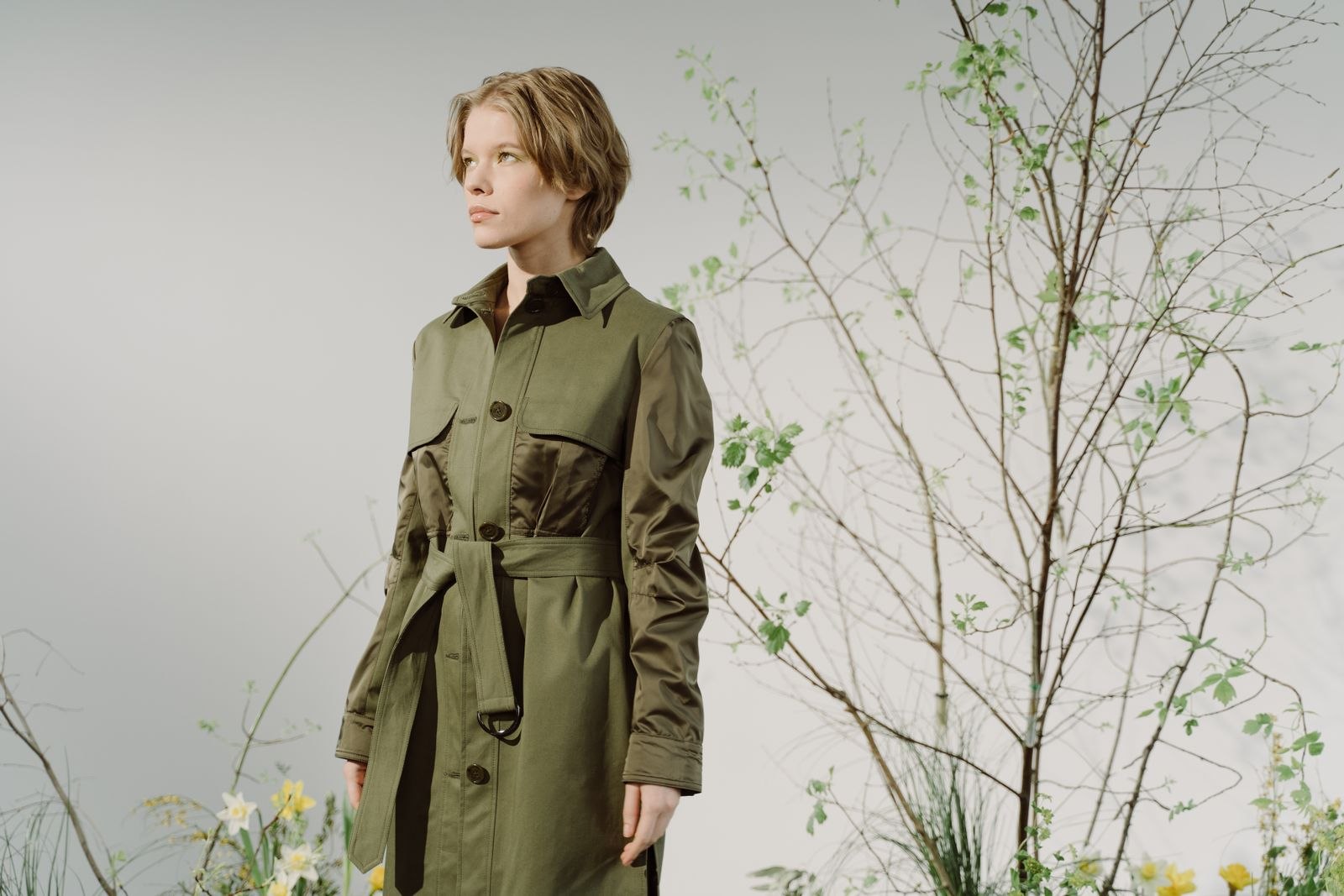
A coat belt can sit neatly when the outfit is empty of everyday belongings. Adding a day bag introduces another object at the waist, hip or shoulder, depending on its intended carrying method. Review those pieces together before leaving. The useful arrangement lets the coat and bag retain their actual roles while supporting comfortable ordinary movement.
Start with the coat’s own construction
Read relevant product information and identify the belt supplied or intended for the coat. Arrange it without forcing a fastening or inventing an attachment through unrelated details. Keep the coat’s opening suitable for the way you plan to wear it.
Look at the complete base outfit as well. A bulky pocket or unfamiliar layer may influence where the belt rests. Reviewing the actual clothing gives more useful information than adjusting an empty coat on a hanger and expecting precisely the same result when dressed.
Add the real carrying load
Use the day bag you intend to take, with a representative selection of its normal belongings within product guidance. An empty bag may sit differently and offer an incomplete comparison. Keep important item identity clear rather than using random objects simply to create weight.
Choose the bag’s intended handle or strap arrangement. Do not assume every visible loop is designed for carrying or adjustment. If the product information is unclear, preserve that uncertainty and seek an appropriate explanation before relying on an improvised method.
Observe the point of contact
Look at where the bag, strap and belt meet. Notice whether the coat opening stays manageable or is repeatedly displaced. Review ordinary walking, sitting and reaching gently in a suitable space rather than turning a try-on into a demanding equipment test.
A different intended bag position may improve the arrangement. Another existing bag may also serve the day more clearly. Keep the decision grounded in comfort, belongings and construction, instead of making one preferred photograph the only acceptable result.
Include arrival and removal
Take the bag off and remove the coat in the sequence you expect indoors. Give the belt a controlled position consistent with the garment’s guidance so it does not become an unexplained loose part among shared belongings. Put the pieces back on and notice whether the sequence is straightforward.
If a companion helps hold something, show the actual item and its temporary place. Ordinary handovers can expose an arrangement that only feels simple while one person remains perfectly still. This is useful feedback about the pairing, not a reason to dismiss either item completely.
Preserve an accurate outfit option
A short note naming the coat, belt arrangement and bag can save a workable combination for later. Record a specific limitation if it matters, such as preferring another bag when carrying additional belongings. Avoid general conclusions about all belted coats.
Return the pieces through appropriate care and storage after wearing. A considered coat-and-bag pairing keeps daily belongings part of the outfit decision from the beginning, with enough room for movement and the ordinary changes that happen beyond the mirror.
Related reading
Keeping Everyday Bag Contents Organised on a Wet Day, How to Layer for a Cold Commute and a Warm Office.