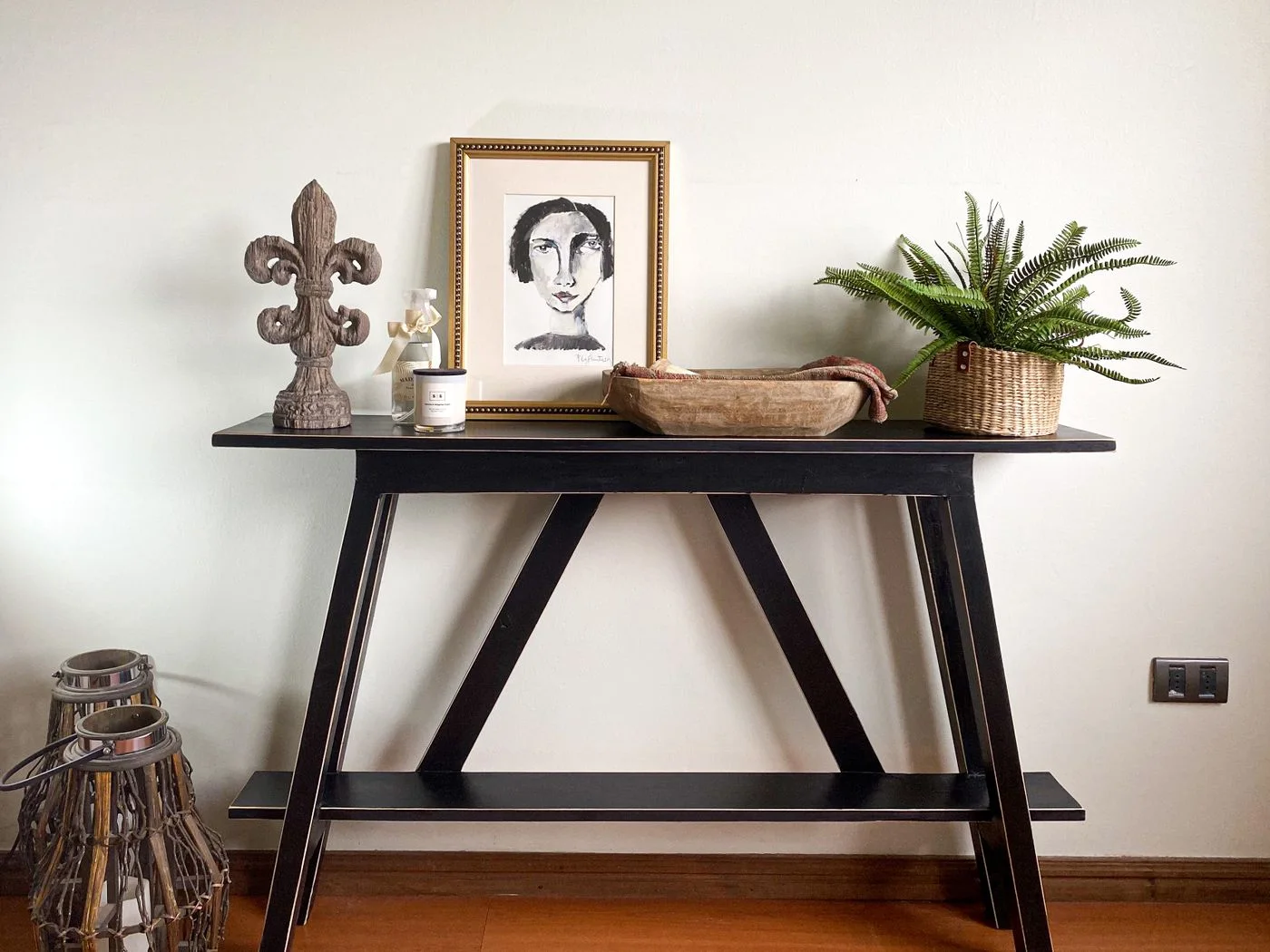
A console display can begin with one framed picture and grow into a crowded group without a clear stopping point. Start with the furniture's role in the room. If it receives daily essentials, reserve that space before arranging decoration. A useful display keeps the chosen picture visible and the surface easy to care for, rather than turning every arrival home or cleaning session into a small rearrangement.
Choose a suitable frame position
Decide whether the frame should hang or lean according to its construction and the household conditions. Follow appropriate restraint and fixing guidance, seeking competent help where the wall or installation is uncertain. A heavy frame is not automatically secure when leaning. Consider passing movement, children and pets. Establish suitable placement before deciding whether a relaxed angle looks more appealing than a wall-hung view.
View it from the room's normal route
Look from the doorway and the seat where the console is usually seen. Assess the picture's scale alongside the furniture and wall. There is no need to fill a fixed proportion of the surface. Start with the frame alone so the decision remains clear. A display can look complete with fewer objects than a close-up styling photograph suggests.
Reserve the landing area
If keys, glasses or another ordinary item arrive here daily, put their place within comfortable reach. A suitable small bowl or tray can help when it fits the contents and surface. Do not bury useful objects behind fragile decoration to preserve a visual arrangement. Keep important belongings managed according to their own needs. The console's working role deserves a clear location rather than whatever gap remains after styling.
Add one companion at a time
Choose an object you enjoy and can care for. Different height or texture can create interest without a strict formula. A plant brings light, watering and drainage requirements; it should not be added solely to finish a triangle of objects. Protect the surface appropriately and keep vulnerable picture materials clear of moisture. Decorative proximity does not remove the care needs of individual pieces.
Test the cleaning routine
Lift the objects and care for the console and frame using methods suitable for their materials. If the arrangement requires several temporary piles, simplify it. A tray can gather small items but may become heavy and awkward when filled. Keep temporary papers in a defined processing place rather than allowing them to spread between the display. A paper task cannot be solved entirely by another decorative container.
What if it feels too empty?
Live with the simpler arrangement for a few days and view the whole room. Nearby furniture, books and light also contribute to the scene. Empty space can make chosen objects visible and daily care easier. The successful console remains enjoyable after ordinary use, with the picture stable and the working area clear, rather than needing to be restored to a perfect photograph each evening.
Related reading
A Thoughtful Guide to Second-Hand Home Shopping, Testing a Wall Colour beside the Furniture That Will Stay.