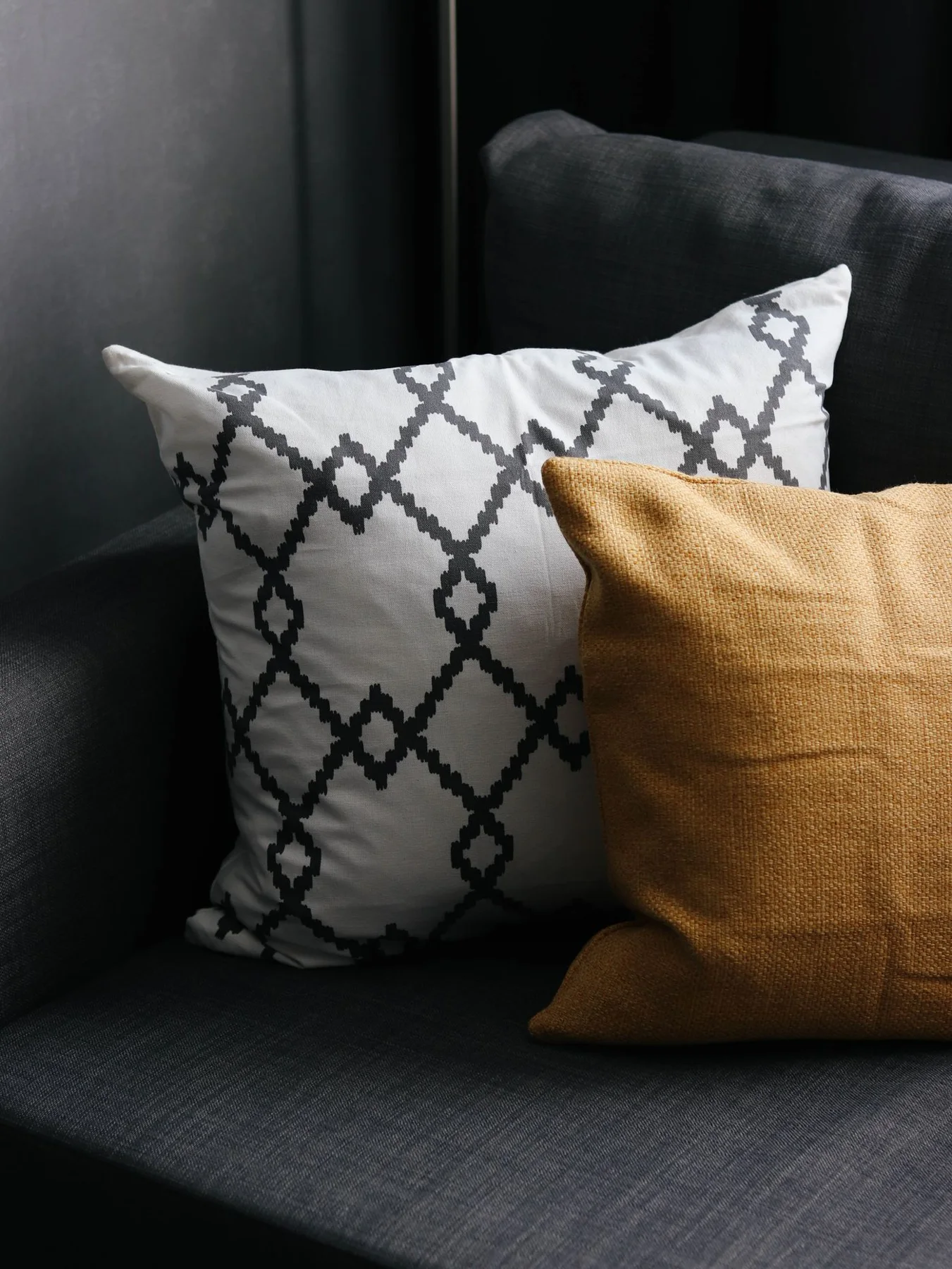
A cushion can look loose because the filling has shifted, the pad has compressed or the cover and insert were never a useful match. Buying a larger insert without identifying the cause can make the cushion hard and strain the fastening. Start with the cover empty and the pad's condition visible. The useful match provides the feel and shape wanted for the actual seat, not only a fuller outline immediately after styling.
Measure without pulling
Read the cover's label and lay it flat naturally. Note piping, seams and the usable interior. Compare those details with the insert's stated dimensions and actual shape. Nominal size is a starting point, not a guarantee that two brands allow the same fullness. Inspect the zip and joins for existing tension. Avoid forcing a pad through a small opening or stretching the cover to make a questionable match appear suitable.
Reshape appropriately first
Follow the insert's care and handling guidance to redistribute filling where suitable. Check whether empty corners improve and whether the effect remains after ordinary use. A compressed or damaged pad may need a different decision from one simply shifted inside the cover. Do not repeatedly buy decorative covers to solve a filling problem. Inspect both components separately before replacing the complete cushion.
Decide the cushion's role
Back support, a small decorative accent and a soft resting cushion can need different feels. Try it on the actual sofa or chair. A firm pad can look neat while pushing the person too far forward; a softer one may suit another use. Consider the regular users and keep the seat comfortable without requiring several cushions to be removed each time someone sits.
Compare filling with maintenance
Read composition and cleaning instructions, including relevant household sensitivities and preferences. Some inserts need more reshaping than others, and care requirements differ. A washable cover does not establish that the whole cushion is washable. Choose a routine you can manage at the intended frequency. Where a purchase trial is possible, check the return conditions and assess the actual product rather than relying on a general filling label.
Investigate the corners carefully
Make sure the pad is positioned evenly and not caught near the opening. A box construction and a flat insert can behave differently. Avoid adding improvised stuffing to force a sharp outline. Ask the supplier about suitable compatibility if uncertain. The cover's seams and closure should remain comfortable without persistent strain. Decorative fullness is not a reason to ignore construction limits.
Can the old insert stay useful?
Yes, when it is clean, intact and suited to another clear role. A softer pad may work in a decorative cover, while a supporting cushion may belong in a different seat. Review the result after ordinary sitting. The successful match holds a manageable shape and feels useful, leaving the chair or sofa inviting rather than turning it into a display of overfilled pads.
Related reading
A Small Bedroom Refresh That Starts with Space, Testing a Wall Colour beside the Furniture That Will Stay.