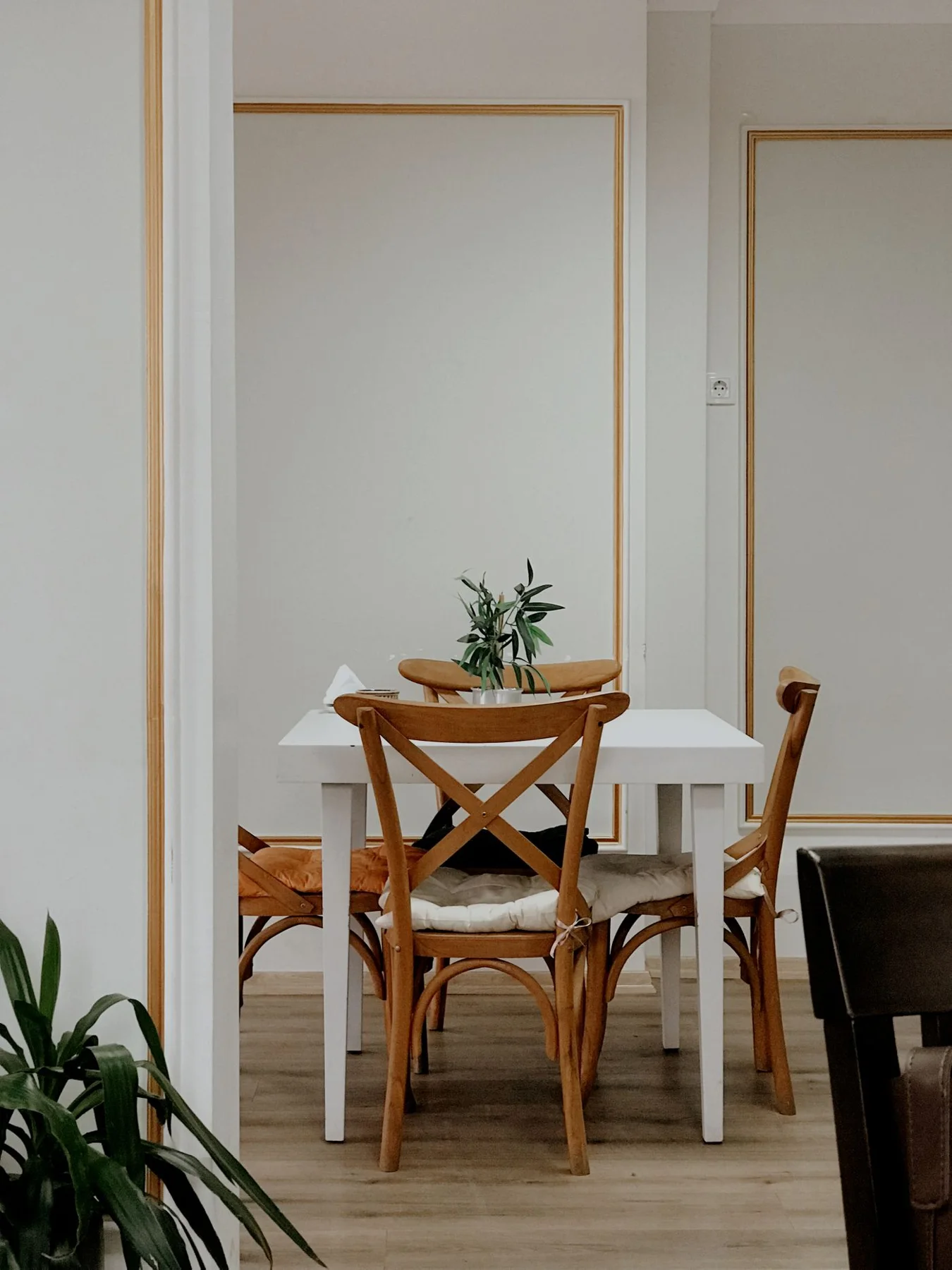
A dining table can accept another place setting without comfortably accepting another chair. Legs, arms and the route behind the seat all need space. Test the occupied arrangement before buying extra seating or deciding the room is too small. The useful layout supports an ordinary meal and lets someone stand without requiring everyone else to remain still. It may involve fewer places than the tabletop's outline initially suggests.
Measure below the tabletop
Record the distance between legs and any apron beneath the top. Compare chair width, arm height and the space available for knees. Overall table dimensions do not describe every usable opening. A chair that pushes neatly underneath may still sit too far from the edge for comfortable eating. Include any cushion that will actually be used because it changes the effective seat height and clearance.
Sit at each intended position
Use everyday place settings and notice elbow room, thigh clearance and comfortable reach. Check the two end positions separately from the sides. Different chairs may place the body differently even when their overall heights look similar. A decorative chair can suit another room while being unsuitable for dining. Choose its role through use rather than assuming a matching colour establishes compatibility.
Stand and pass behind the chair
Pull it out as someone would during dinner, then test the route around it. Include doors, cupboards and nearby furniture. Keep necessary access clear and consider the people using the room. If the layout works only with every chair pushed fully in, it is not a complete dining arrangement. A smaller comfortable group can be more welcoming than an overloaded table that makes movement difficult.
Inspect existing seating before replacing it
Check condition, stability and intended use. Seek competent repair advice for loose joints or uncertain construction. A fresh finish does not resolve structural movement. Follow loading and care guidance and use floor protection appropriate to the chair and surface where needed. Consider how easily the chair can be moved by its regular user, not only how light or substantial it appears in a product image.
Keep the tabletop useful
A large permanent centrepiece can remove space needed for meals. Try a smaller removable object or leave the surface clear. Bags and other temporary possessions also need another destination if they repeatedly occupy the seats. The chair layout is only one part of making the eating area ready without a preliminary clearing project. Keep ordinary use ahead of a perfectly arranged display.
Where should occasional chairs live?
Choose a suitable storage position before buying extras. Stack or fold only when the model is designed for it and follow its guidance. Do not let spare seating narrow the main route all week to solve an infrequent gathering. The successful arrangement gives each person a comfortable usable place and preserves everyday movement, allowing the table to serve the home rather than dictate every path through it.
Related reading
How to Host a Board-Game Evening People Can Settle Into, A Thoughtful Guide to Second-Hand Home Shopping.