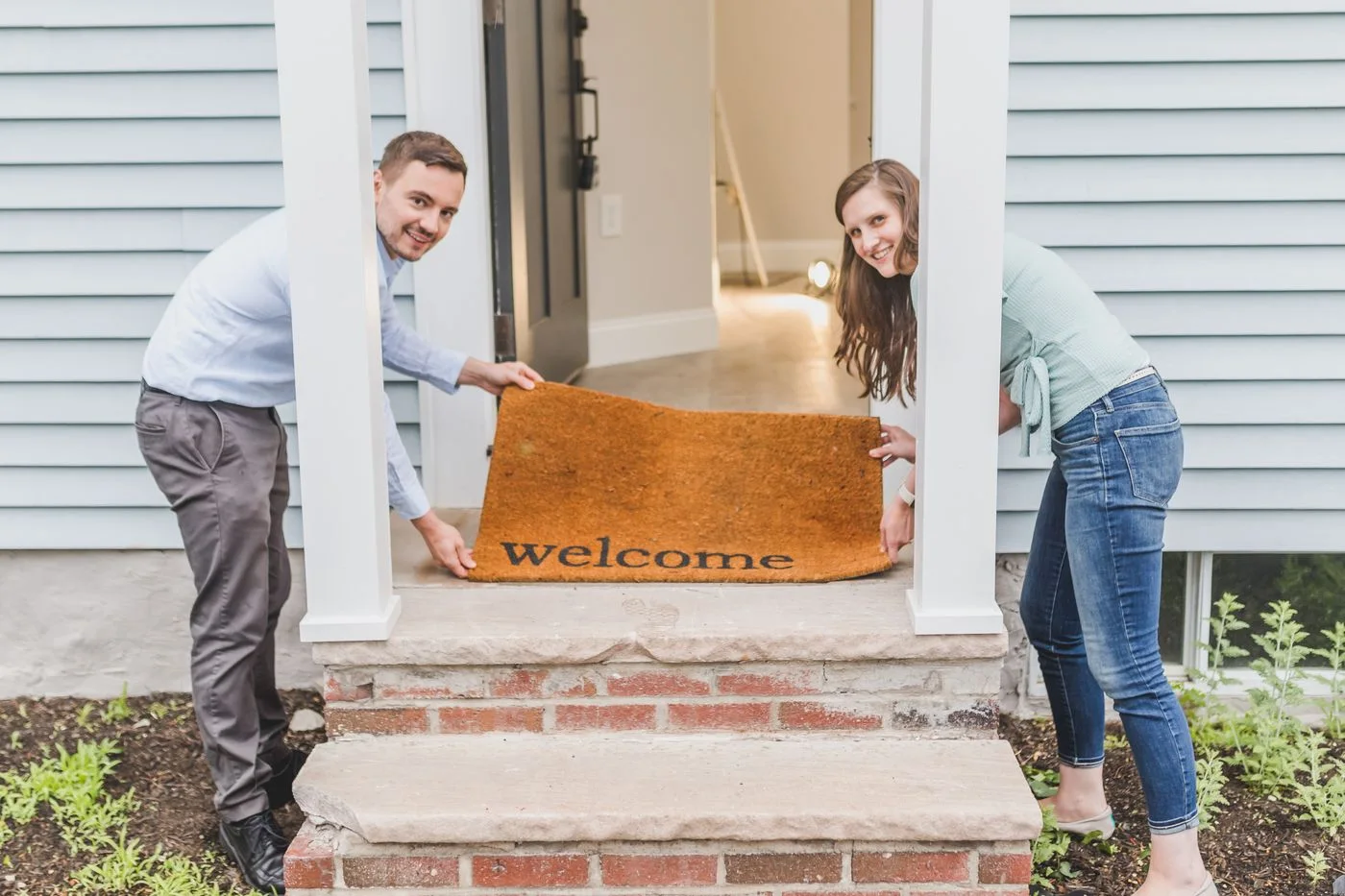
A welcome mat is useful only when the door can open and people can enter comfortably. Height, backing and placement deserve attention before the printed message. Begin at the actual threshold and observe a normal arrival with bags or shopping. A suitable mat should support that routine while remaining appropriate to the surface and conditions, rather than needing to be moved aside every time the door swings.
Check the full door movement
Measure available clearance across the mat's intended position, including any sweep or other component. Uneven flooring can change the gap through the swing. Do not modify safety-related hardware to accommodate decoration. Follow property requirements and keep necessary access clear. If no suitable mat fits there, another permitted position or product may serve better than a purchase that repeatedly catches beneath the door.
Read the intended location
Check whether the product is suitable for indoor or outdoor use, its exposure requirements and compatible surfaces. A sheltered porch differs from a dry hall. Do not assume a thicker mat is universally better or that a decorative design tolerates rain. Read drainage and care guidance. Choose the construction for the task before deciding which colour best connects to the surrounding room.
Assess the edges and backing
Use the mat as directed and check that it lies appropriately without curling or unwanted movement. Consider different users and the transition at the threshold. An unsuitable backing may affect some floor finishes. Keep the entrance route usable rather than squeezing the mat around a shoe rack. Inspect periodically because wear, dirt and moisture can change how a previously suitable mat behaves.
Size it for the arrival pattern
Notice where feet actually land and where shoes are removed. A very small mat may decorate the doorway while missing the main stepping area. A large one can interfere with cupboards or another door. Try the footprint temporarily using a suitable removable method where practical. Walk through with the ordinary bag before buying, including the space needed to turn and close the door.
Plan cleaning and drying
Follow material instructions and identify an appropriate place to clean the mat without obstructing shared routes. Follow property rules and relevant local disposal guidance for debris or worn materials. Check the floor beneath and care for it appropriately. A mat that remains damp or heavily soiled needs attention, not another decorative object placed over the problem. Maintenance should be realistic for the entrance's actual exposure.
Do both sides need a mat?
Only when the arrangement suits the available space and products. Two mats can create another obstacle in a narrow doorway. Choose the clear useful role first and review after ordinary use. The successful welcome detail lets the door work and people arrive comfortably, with a manageable care routine. Its printed greeting is a preference that comes after those practical decisions.
Related reading
A Thoughtful Guide to Second-Hand Home Shopping, A Rug Underlay That Suits the Floor and the Door Clearance.