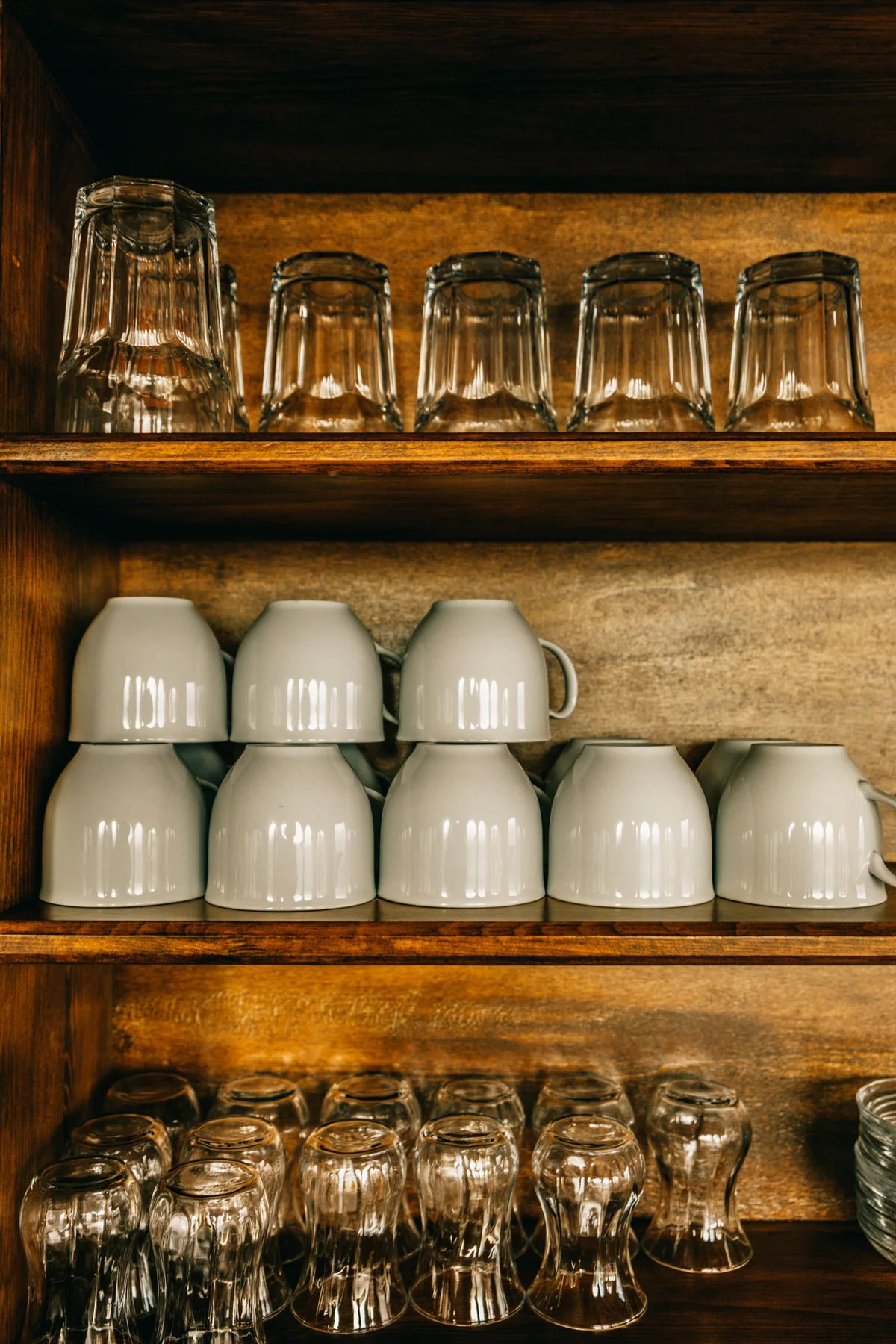
A kitchen cupboard can contain enough glasses and still make a simple drink awkward. The favourite tumbler may be behind taller pieces, while a rarely used set occupies the easiest shelf. Arrange by the actual routine before shopping for replacements. A useful collection supports taking a glass out, cleaning it appropriately and returning it without rearranging several neighbours every time.
Count the regular group
Set out everyday pieces and separate occasional ones. Inspect condition and handle damaged items appropriately. Consider the household's use between washing sessions instead of choosing a fixed number per person. An occasional gathering does not have to dictate the main shelf arrangement all year. Keep a clear suitable plan for spares without letting them obstruct the glasses used every day.
Check hand space as well as height
Measure the usable shelf opening and try lifting the actual glasses. A tall piece may fit upright but be difficult to remove beneath the shelf above. Keep frequent items within comfortable reach and follow cupboard loading guidance. Do not place an awkward heavy group high up simply to preserve a symmetrical row. The person with the least convenient reach should be able to use the arrangement comfortably.
Stack only where intended
Read the manufacturer's advice before nesting glasses. Apparent fit does not establish that the pieces are designed to stack. Tight nesting can cause damage or difficult separation. Avoid forcing stuck pieces or using sudden temperature changes and improvised tools to release them. If the collection cannot be stored comfortably in a suitable single layer, review quantity and shelf position rather than compressing it further.
Include washing compatibility
Check care guidance and how the shape fits the actual dishwasher rack or handwashing routine. Allow appropriate drying before storage. A decorative glass may be less convenient than a simpler shape in a small kitchen. That can be a valid occasional choice, but it should not be mistaken for the easiest everyday replacement. Compare the complete care journey before buying a set solely for coordinated appearance.
Keep groups understandable
Separate by use or approximate size if that helps. Mixed pieces can look orderly when each group has a clear place. There is no need to replace harmless variation with an entirely new collection. Leave enough space to remove and return items. A gap is functional capacity, not an invitation to buy another shape of glass simply because the shelf is not visually full.
When is another set justified?
When a real role remains missing after the review and suitable storage is available. Check current product information and choose a manageable quantity. Individual replacements may meet some needs more directly. The successful cupboard gives the household a suitable glass without searching or delicate extraction, making ordinary drinks easier while leaving occasional pieces available in a clear appropriate place.
Related reading
How to Host a Board-Game Evening People Can Settle Into, A Thoughtful Guide to Second-Hand Home Shopping.