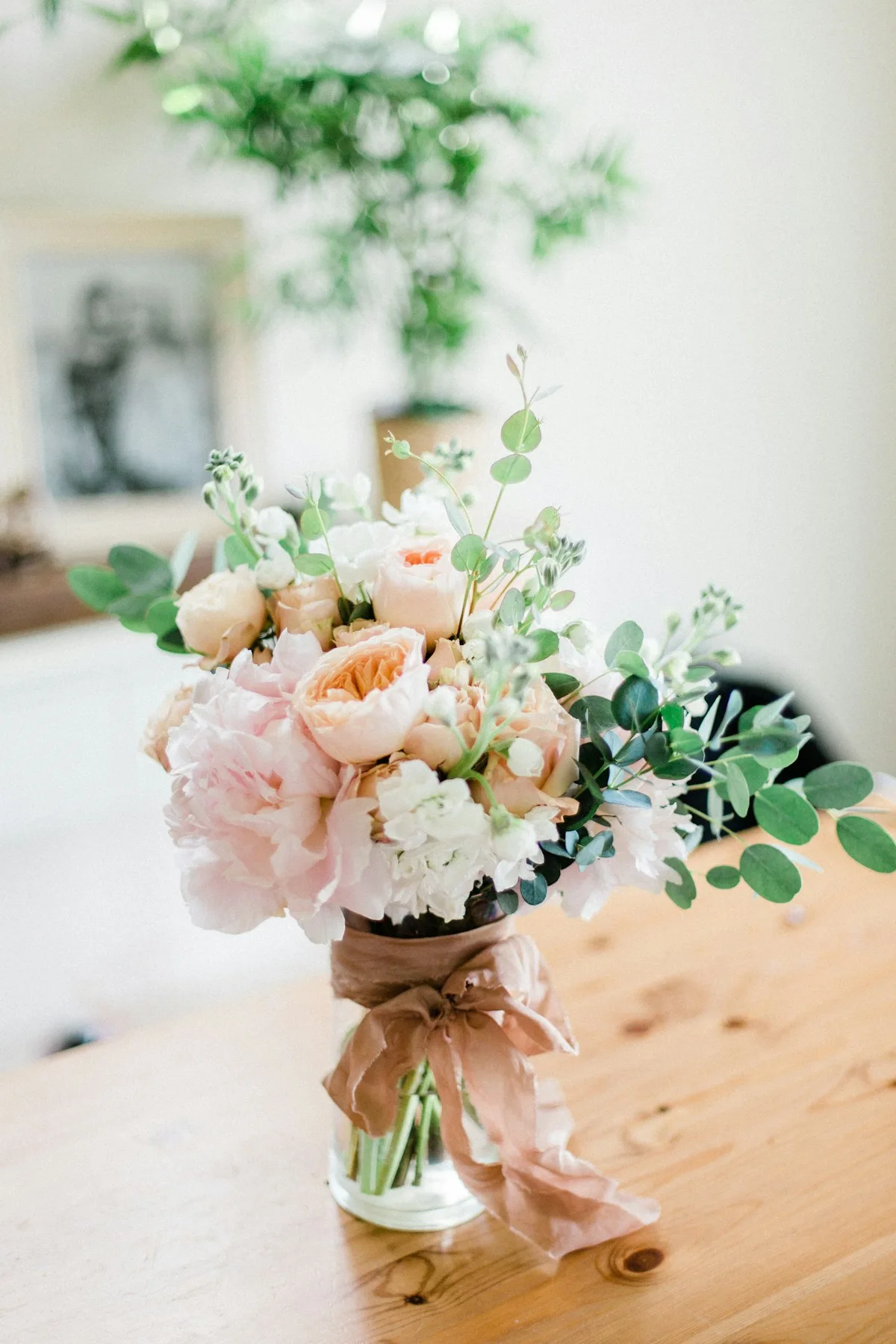
A flower arrangement already in the room can provide a modest drawing or colour-study subject without starting a new supply-shopping project. Choose a few relationships that genuinely catch the eye and give them a limited part of a page. The exercise is about noticing, not proving that every petal can be reproduced. A small unfinished-looking study can still preserve the particular contrast or grouping that made the arrangement enjoyable to look at.
Choose one ordinary view
Look at the flowers from a comfortable appropriate position and notice the main visible areas. A pale cluster beside green foliage or a warmer centre against a quiet background may be enough to begin. Do not move around repeatedly collecting more detail than the page needs.
Give the study a simple question. It might concern which colour leads or how a small dark gap separates two lighter areas. The question keeps attention focused without requiring specialist botanical identification.
Use materials already understood
Work with suitable familiar materials according to their intended use. Make an appropriate small test where helpful before adding marks to the main study. Keep the activity within the actual household setting rather than taking over another person's working surface.
Do not promise exact colour matching. The available materials, paper and ordinary light all belong to this observation. A useful personal study can describe an impression without claiming to measure the arrangement objectively.
Place the broad relationships first
Begin with the larger areas or repeated groups. Their relative amounts can communicate more than a set of carefully outlined individual petals. Leave some background visible so the flowers have a surrounding space rather than becoming an isolated collection of marks.
Use brief words beside the study if they clarify what was noticed. Pale beside green or warm centre can be enough. Avoid inventing a flower name or a precise paint formula merely to make the page seem more authoritative.
Stop at an understandable point
Finish when the chosen relationship has become clear enough to revisit. Further detail may be enjoyable, but it is not required to validate the time spent looking. An ordinary creative pause can end while the rest of the page remains empty.
Return materials through their normal appropriate care routine and leave the flowers in their suitable arrangement. The study should fit around home life instead of generating an unfinished setup that occupies every surface afterward.
Keep the page if it holds an observation worth saving, or let the experience be enough on its own. The flowers do not need to produce artwork to justify their place in the room. A modest colour study simply offers another way to enjoy what is already present, with a clear beginning and an equally modest finish.
Related reading
A Small Flower Gift with the Recipient’s Space in Mind, Testing a Wall Colour beside the Furniture That Will Stay.