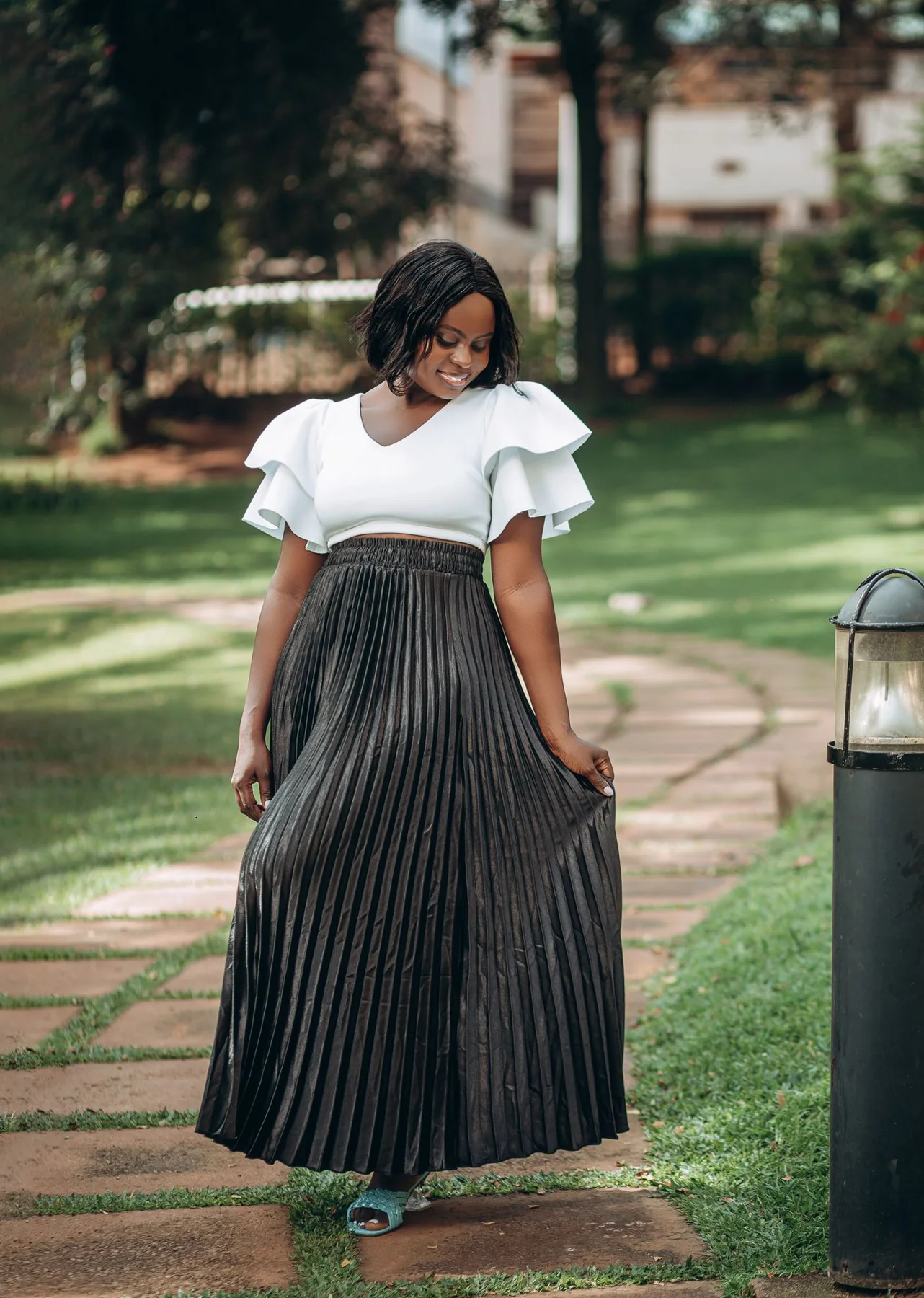
A long pleated skirt can be remembered through its standing silhouette while the planned activity is mostly seated. Review that version of the outfit before choosing accessories or another layer. The waistband, top and ordinary belongings may become more important at the table than the full length visible in a photograph. A useful combination serves the real visit rather than preserving one view throughout it.
Choose the actual base outfit
Put the skirt with a familiar top and suitable shoes. Read relevant product information and settle the garment in its intended wearing position. Do not move the waistband unusually high or low solely to imitate another outfit's proportions.
Keep current readiness honest. A care or repair question remains separate from the print, colour or movement that attracted you. The skirt should not enter the ready group because it looks appealing while an unresolved task is hidden.
Review the seated version
Sit in a suitable comfortable place at an ordinary table. Notice the neckline, waist area and amount of top visible, then stand again. A modest adjustment while dressing differs from repeatedly rearranging the outfit after every transition.
Keep your observation specific. If the top's lower edge competes with the waistband, compare another owned top while leaving the skirt and shoes unchanged. That can clarify the actual relationship without creating an assumed shopping gap.
Decide on the layer's role
Add the coat, jacket or cardigan you expect to use. Review its intended opening beside the top and pleats. A longer outer layer can show a different part of the skirt from a shorter familiar one, but neither choice has to become a universal rule.
Remove the layer if it will come off indoors. The skirt-and-top base should retain an understood role. Give the removed garment an appropriate temporary place consistent with its guidance and setting rather than turning the bag into improvised storage.
Include the real carrying group
Use the bag with the belongings the day genuinely requires within guidance. Its intended strap or handle can change the arrangement that felt simple in an empty mirror view. A smaller decorative bag is useful only when its actual role is understood.
If a companion helps hold something, explain the item and intended place. A clear handover can support the ordinary arrival more effectively than adding another accessory purely to make the outfit seem finished.
Preserve a repeatable visit option
After an appropriate outing, note the actual skirt, top and layer if they served the activity. Keep a limitation specific to those products instead of making a general claim about pleated clothing. Another construction can deserve a different decision.
Follow the garments' respective care and storage guidance after wearing. A table-side review gives a long skirt a realistic daily role while keeping personal preference, ordinary movement and the full visit central beyond the standing photograph that first made the shape appealing.
Related reading
A Spring Occasion Outfit That Handles the Whole Day, An Elasticated Waist with Smart Everyday Separates.