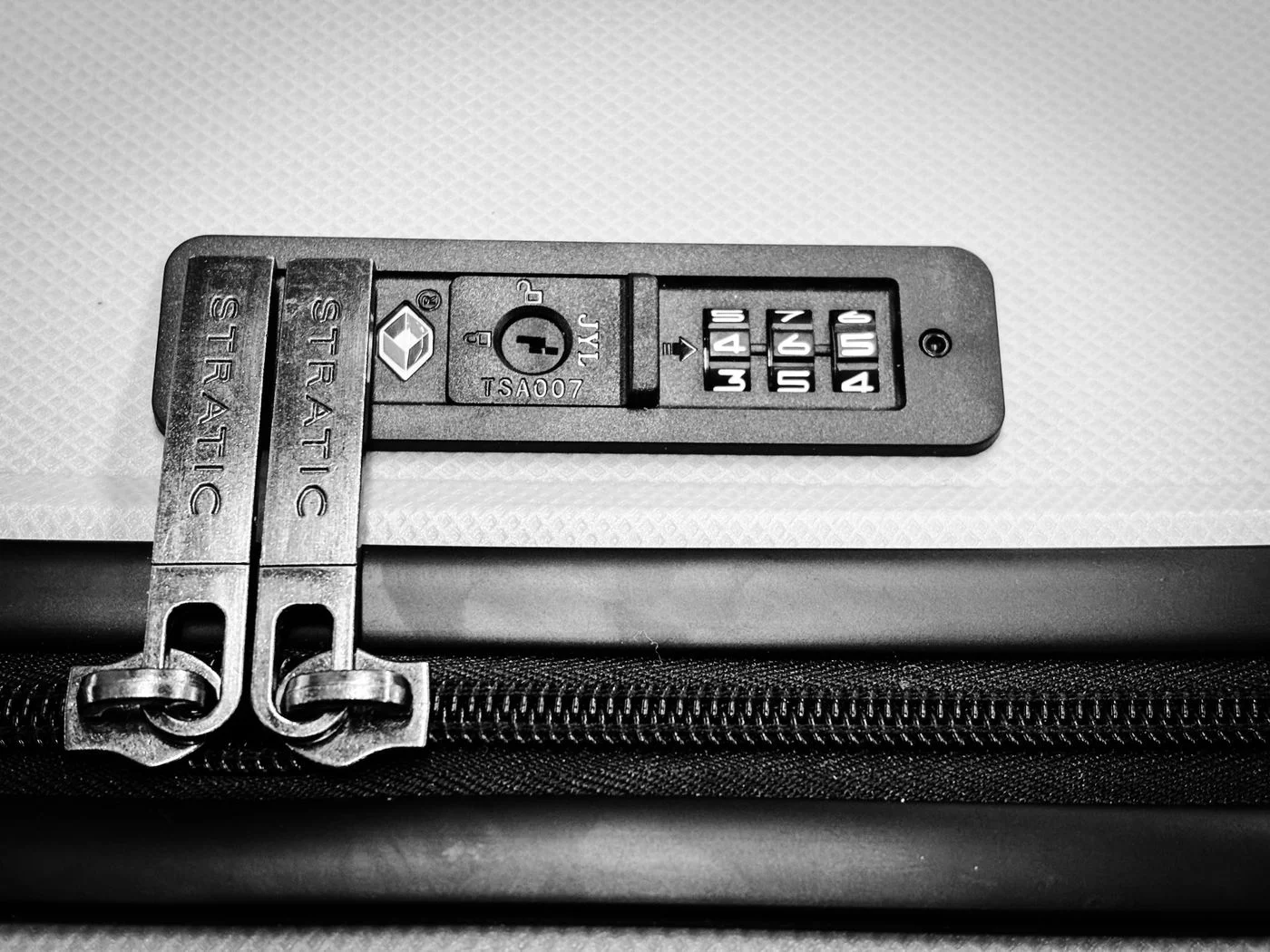
A luggage zip is easier to assess before the case is full and the departure deadline is close. Check its movement and condition while access is clear, then repeat with an appropriate representative load. A stiff or strained closure is useful information, not an invitation to pull harder. The aim is a case that closes as designed, with any repair or lock question addressed through suitable model-specific guidance.
Inspect the accessible track
Look for damaged teeth, fabric caught near the zip and unusual wear at corners. Do not dismantle or force parts beyond the manufacturer's guidance. Remove ordinary debris only through an appropriate method. A visible problem may need professional assessment rather than an improvised treatment. Keep the location and symptoms clear so a repair provider can understand what happens during normal use.
Move the zip on the empty case
Open and close it as intended, noticing resistance or misalignment. Use handles and support the case appropriately. An empty test can reveal a basic condition issue, but does not establish performance when loaded. Do not apply generic lubricants or sharp tools to change the movement without suitable advice. The shell, fabric and zip materials may require different care.
Add a realistic load
Pack within the case's intended capacity and relevant carrier requirements. Keep contents from pressing unnecessarily against the closure. A bag that only shuts when heavily compressed may be overloaded or poorly arranged. Repack or reduce contents before assuming the zip is faulty. The closure should not be used as a tool to pull the whole case into a smaller shape than its packing supports.
Check corners and pull access
Close the case normally and notice where tension concentrates. Keep straps, clothing and organisers clear of the track. If two pulls meet a locking system, use it according to its instructions. Do not infer compatibility or security from an integrated lock's appearance. Keep necessary model information and access arrangements managed appropriately for the journey, and seek official guidance for any setting or access problem.
Allow time for a decision
If damage or repeated malfunction remains, obtain competent repair advice using the actual model and issue. Compare the realistic option with another suitable bag already owned. A last-minute unsupported fix can create more uncertainty. Check current travel requirements directly where a closure or lock arrangement matters. Keep any claim about the bag's capability grounded in its actual condition and product information.
Should the case be replaced for one stiff zip?
Not automatically. The cause and repair feasibility should decide, alongside the case's wider condition and your needs. A clear inspection may show a packing issue rather than a component failure. The successful check prevents avoidable pressure on the closure and produces a practical readiness decision, leaving the case to carry belongings instead of becoming another unresolved problem at departure.
Related reading
Leave Return-Journey Space before Shopping on a City Break, Organise Hand Luggage Around What You Need Next.