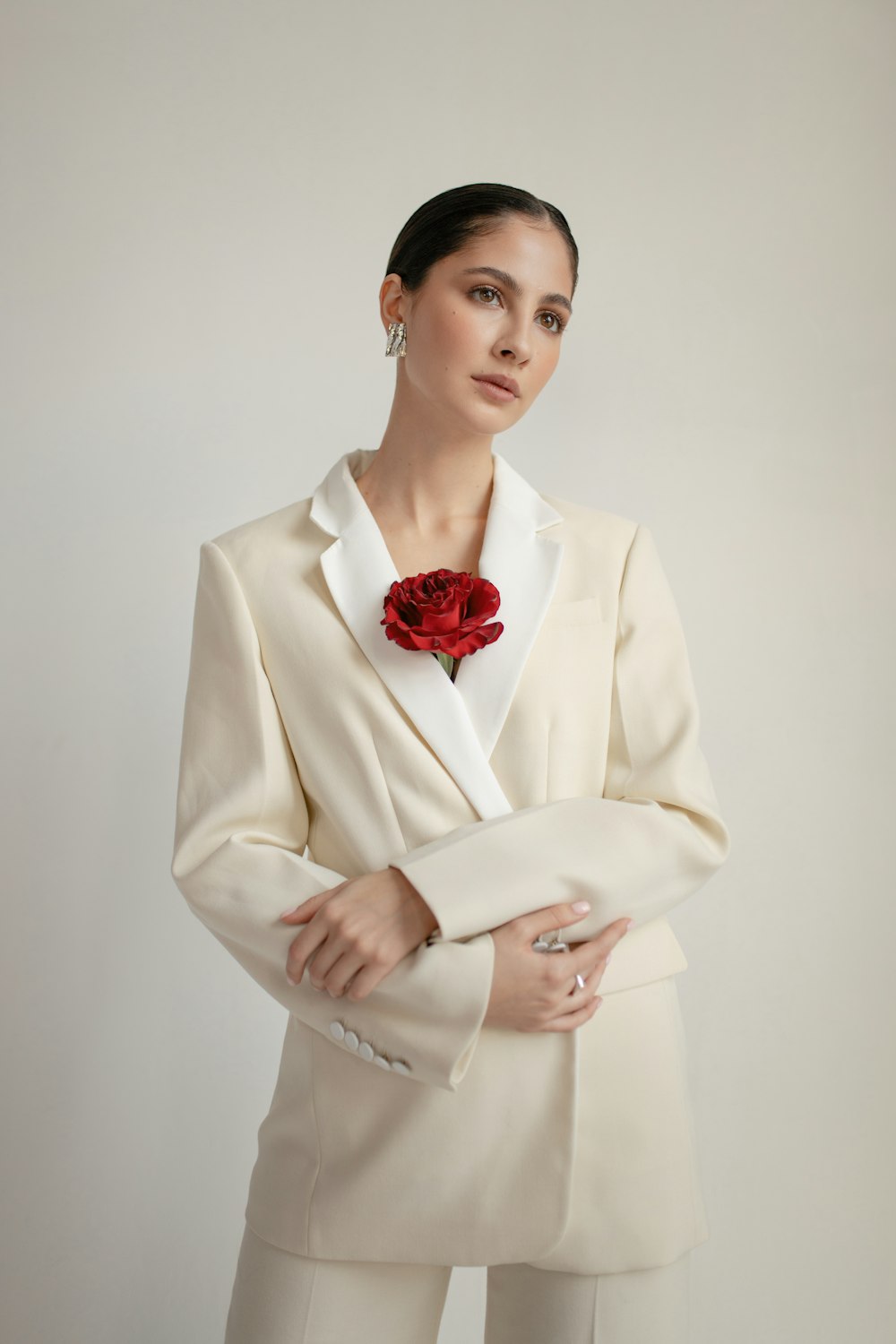
A pale jacket can make a small colour detail conspicuous. The garment's broad quiet surface gives the accent room to appear without requiring a brighter top, bag and shoes as well. Begin with the actual jacket and a suitable owned accessory whose use is understood. An illustrative red floral detail shows a visible relationship, but the attachment and product requirements of another garment remain separate questions.
Look at the jacket's own structure
Wear it over a complete familiar base and notice its lapels, collar and fastening. These edges provide shape before another object is introduced. A pale outfit does not begin as an empty display awaiting decoration.
Use the garment in its normal supported arrangement. A fit or fastening issue should remain visible rather than be hidden by a colour accent. The outfit note needs to describe the actual clothes, not only the most pleasing frame.
Choose one suitable object
Use an owned detail according to the relevant information for both accessory and garment. The comparison is not an instruction to pin or improvise an attachment to unfamiliar fabric. If suitability remains unclear, keep the question separate and leave the accent off.
A version without the object remains a valid outfit. The experiment should offer an additional preference, not make the jacket dependent on a decorative method it cannot appropriately support.
Read the amount of colour
A small bright area near the face may remain clear from a normal distance. A larger object creates a broader interruption and can compete with the lapels. Compare the actual scale rather than a close accessory photograph that removes most of the jacket.
Include the seated view when it belongs to the plan. Around a table, a detail near the neckline may become the main accent even when it looks modest in a full-length image. The two scales can explain different parts of the same outfit.
Keep the rest steady
Use the familiar bag and footwear already appropriate to the day. Adding several matching pieces immediately changes the question from one accent to a larger colour theme. Understand the single detail's contribution first.
If another suitable owned object repeats the colour, compare one change at a time. Exact shade matching is optional, and screen images cannot promise it. The real possessions together provide the local visual reference.
Retain a concise reason
Write down the jacket and accessory identities with the effect you preferred. One small colour mark remains clear beside the pale lapel is enough to guide another day. Avoid broad claims that the arrangement suits every jacket or occasion.
A considered accent can give familiar tailoring another version while the jacket's own shape remains useful without it. That distinction keeps the experiment small, allowing colour to contribute without turning a modest detail into a complete coordinated purchase project.
Related reading
A Spring Occasion Outfit That Handles the Whole Day, A Floral Dress with One Clear Necklace Decision.