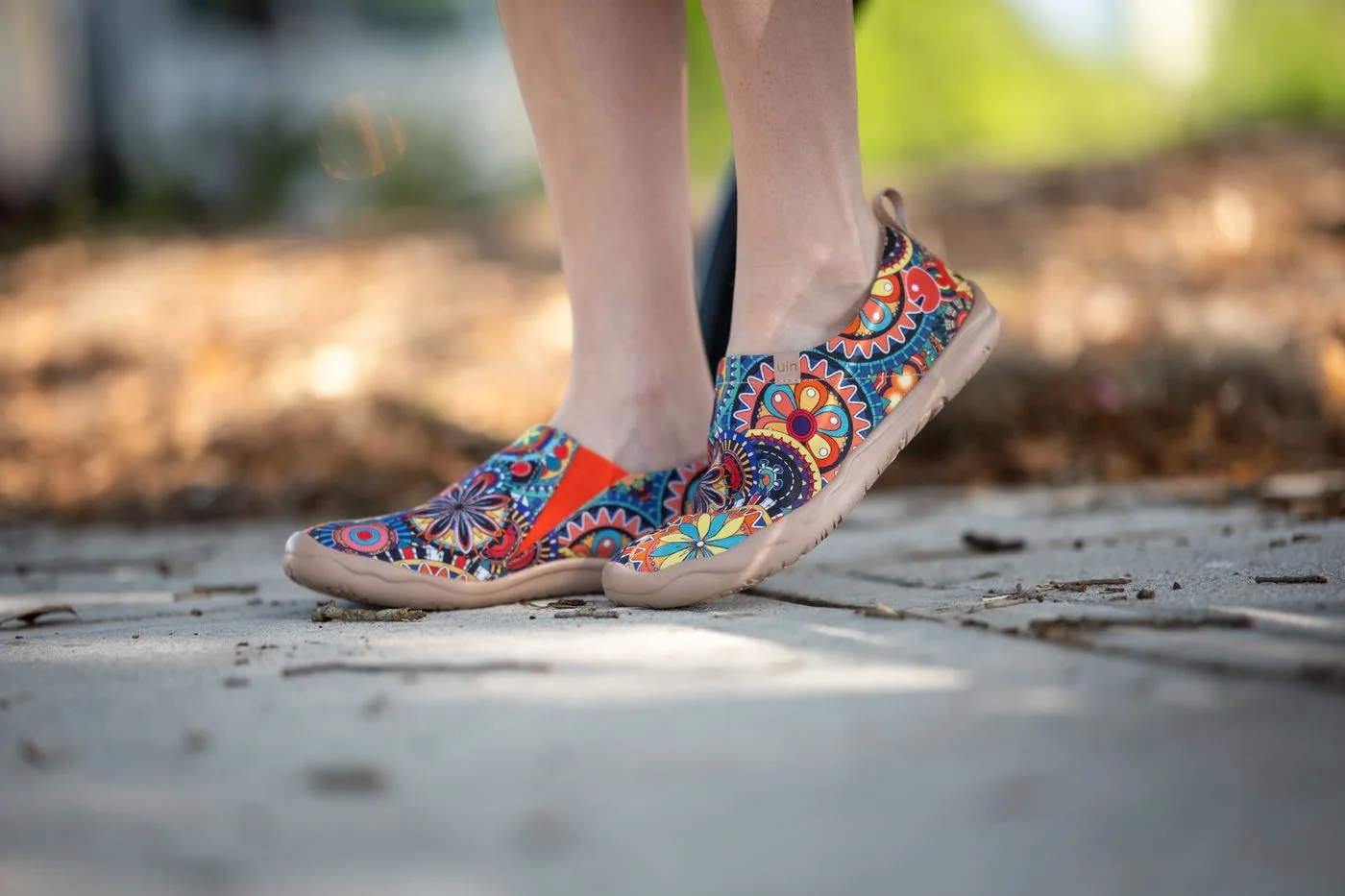
A colourful shoe photograph can attract attention before the precise product is clear. A patterned upper, laces and background clothing may create one appealing group, while the listing concerns only a particular pair. Read the actual scope and product details before turning the scene into a wardrobe plan. Decoration can guide preference without answering every practical purchase question.
Identify the exact pair
Read the maker, model and relevant variant in the actual listing. Similar patterns can appear on several products, and a small thumbnail may conceal their differences. Keep the precise identity beside any saved comparison image.
Do not assign material or intended use from the visible surface. A bright print and a lace-up outline are observations, not a complete specification. Preserve an unanswered relevant detail rather than completing it with information from a familiar pair.
Separate shoes from styling
Read what is actually included. Socks, garments or other objects visible nearby should not become assumed parts of a set. A campaign may show several products whose colours coordinate without being one purchase.
If several variations appear in the same gallery, identify which images correspond to the version being considered. Do not select the most appealing feature from each image and combine them into an imagined product that the listing never offers.
Review more than the upper pattern
Look for available side, opening and detail views. A front crop may show the print clearly while hiding the construction that matters to your own decision. Keep missing areas unknown rather than mentally adding the shape of another shoe.
Read supplied size and care information with its explanation. A label alone is not a guarantee across every product. If an important detail remains unclear, ask about that feature specifically instead of seeking a broad promise that the shoes will be perfect.
Connect the pair with existing clothing
Choose one actual outfit role and familiar suitable garments. A plain trouser pair can give the pattern a visible place without requiring a bag or top that repeats every colour. Another existing detail may also suit your preference; neither choice needs to become a universal formula.
Keep photographic colour comparisons approximate. Lighting and screens can influence appearance, so preserve actual product identity rather than relying on a remembered shade from the campaign scene.
Make the received-item decision appropriately
If ordering, follow applicable purchase and product guidance while comparing the received identity and visible details with the information relied on. Do not force a component or create an unsuitable test to prove the first interpretation correct.
Keep relevant documentation available and use the appropriate process for a discrepancy. A scope-led review lets a lively pattern remain enjoyable while keeping the real product, existing outfit and unanswered questions clear. It prevents a close decorative image from becoming a complete specification or a coordinated shopping obligation.
Related reading
Rainy-Day Shoes for Real Walks, Errands, and Office Arrivals, How to Build an Outfit for a Full Day of Walking.