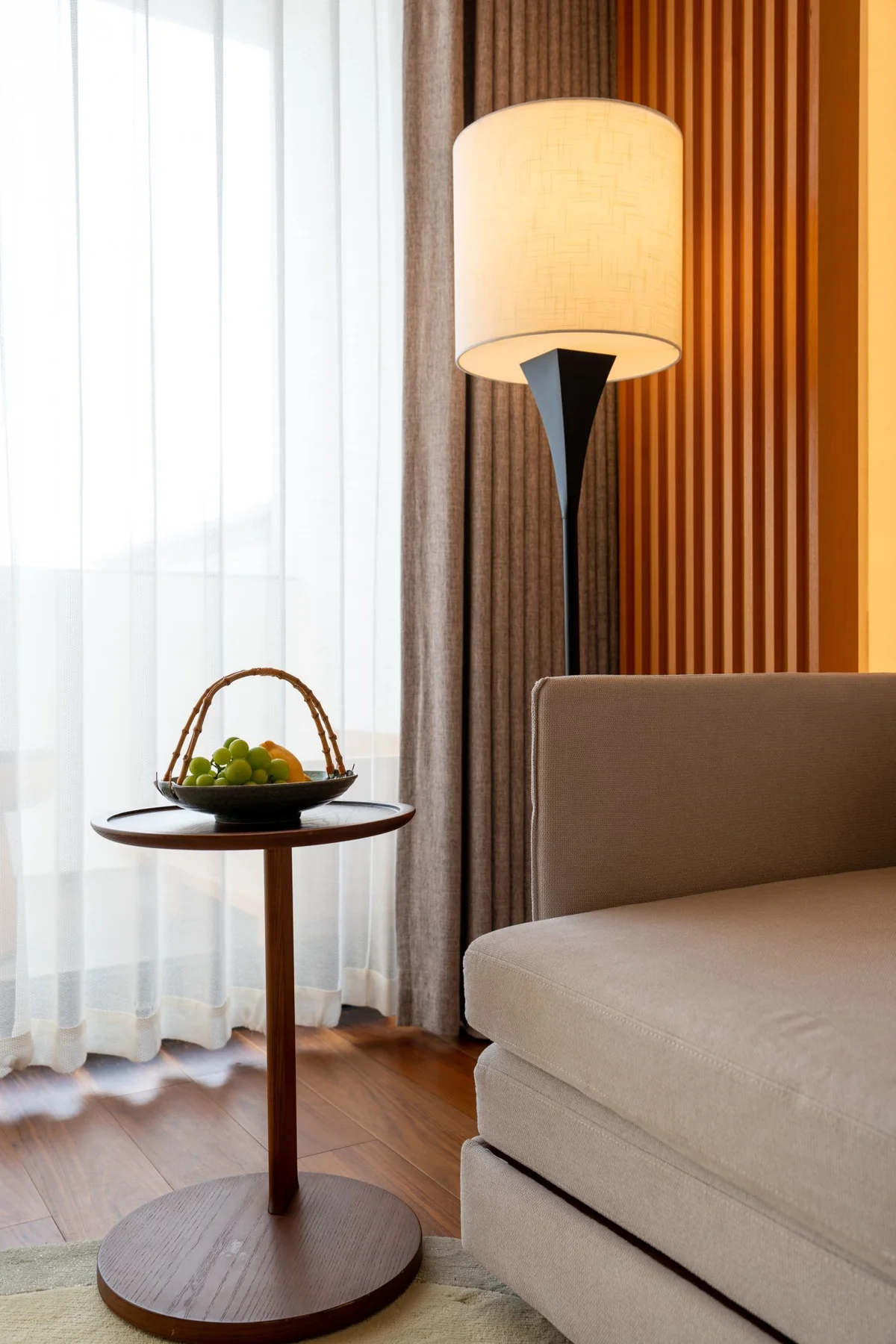
A side table earns its place through reach, not only through the way it balances a sofa visually. A cup should be easy to set down without twisting around an arm or moving a decorative object first. Start from the actual seat and a realistic group of objects. The useful surface can be small when its position and purpose are clear, leaving the rest of the room easy to move through.
Test with a stable existing surface
Borrow a suitable table if possible and sit as you normally would. Reach toward an empty cup and notice whether the sofa arm blocks the movement. Compare height and position before shopping. A table aligned neatly with the arm may still be awkward for the person. Try the neighbouring seat too if the surface will be shared. Do not use a fragile stack as a temporary experiment.
Measure the complete footprint
Record floor space, table legs or base dimensions and clearance around doors or furniture. A small top can stand on wide legs. If the design slides over a seat, check the actual under-sofa clearance and product requirements. Include rugs and uneven flooring in the assessment. The table should stand appropriately and remain within its intended loading guidance, not rely on a carefully balanced position that ordinary movement can disturb.
Choose the main landing role
Decide whether the surface mainly holds a drink, current book or lamp. A broad lamp base can occupy the area the table was meant to provide. Try the actual objects rather than buying accessories to fill the top later. One useful item and some clear space can be enough. A side table does not need a permanent tray, vase and stack to look considered.
Walk past the occupied seat
Check the route with someone sitting and the table in use. Consider carrying shopping or laundry through the room. Rounded edges may suit a tight space but do not remove the need for clearance and stability. If the table repeatedly catches clothing or blocks a drawer, choose another footprint or position. Convenience from the seat should not create an obstacle for everyone passing behind it.
Read surface-care guidance
Consider ordinary condensation, spills and warm objects according to the finish's requirements. Use suitable protection where needed. A delicate surface can be worthwhile if its maintenance is chosen knowingly, but should not be assumed equivalent to every other tabletop. Keep the arrangement clear enough to clean without moving a heavy decorative group. The care task is part of everyday usefulness.
Must it match the coffee table?
No. A relationship in scale or material can be enough, and each surface can serve a different role. Live with the test position for several evenings where practical before buying. The successful table remains reachable, stable and easy to maintain, giving ordinary objects a useful place without forcing the room's walking routes to accommodate another decorative purchase.
Related reading
A Thoughtful Guide to Second-Hand Home Shopping, A Small Bedroom Refresh That Starts with Space.