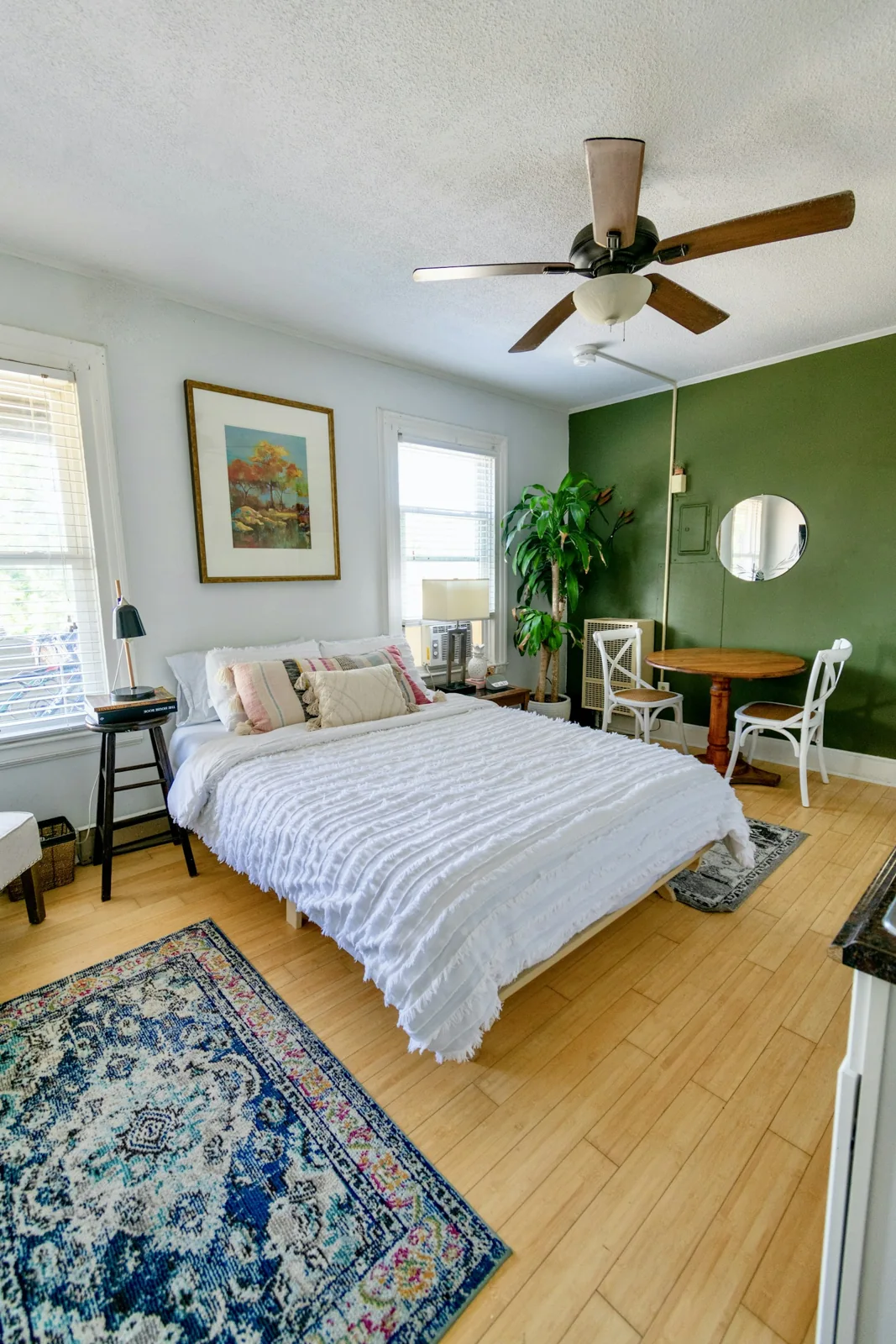
A spare room can look restored while several belongings have only moved out of view. A borrowed book may sit in a drawer, linen may be waiting elsewhere and a visitor's small object may have joined household storage. Reset the actual belongings rather than treating a made bed as proof that every task is finished. A short, clear review can reconnect visible tidiness with real next actions.
Identify what changed during the visit
Start with the room's actual use rather than a standard list copied from a styled bedroom image. Name the moved furniture, borrowed objects and other belongings that genuinely need a return decision. Keep the review small enough to finish usefully.
Do not absorb an unfamiliar item into the household because it matches the room. Preserve ownership and arrange a clear ordinary handover where appropriate. A similar colour or convenient drawer does not establish who owns an object.
Separate room tasks from product tasks
A chair returning to its suitable ordinary position is a different action from linen completing its own care process. Keep those statuses distinct. An object placed beside the bed does not necessarily share the bedding's next step.
Read relevant product guidance for the actual items. A pale bed in an illustrative photograph does not establish material or one universal routine. Preserve a genuine unanswered question rather than borrowing instructions from another product.
Write the missing context plainly
Use a short note only where a task would otherwise lose meaning. “Return the borrowed reading book” is more useful than “finish spare room.” Name the object and next action without recording unnecessary private details about the visitor.
Keep observations separate from prescribed solutions. An unfamiliar fastening or other component may need clarification rather than an improvised treatment chosen solely to empty the room quickly. An honest pause can preserve a useful question.
Restore the ordinary room route
Review doors, cupboards and suitable access as the space normally functions. A decorative arrangement added for a photograph should not make everyday retrieval depend on moving several unrelated objects. Use existing appropriate places before buying another container.
Return only belongings that genuinely serve the room's ordinary role. A temporary object does not need to stay because it occupied the bedside area during the visit. The room can remain pleasant without retaining every element of a staged guest setup.
Close the reset deliberately
Remove a task from the active list once its real step is complete and update any remaining question. Old instructions should not continue governing belongings after their status changes. Keep useful product information accessible where it serves an actual need.
A clear spare-room reset can leave a pleasant space and an understood remaining action if one genuinely exists. Its value comes from separating ownership, ordinary storage and unfinished work, allowing the room to return to household life without asking the first tidy photograph to tell the whole story.
Related reading
The First Useful Box to Unpack after Moving, Guest Towels with a Clear Drying Place.