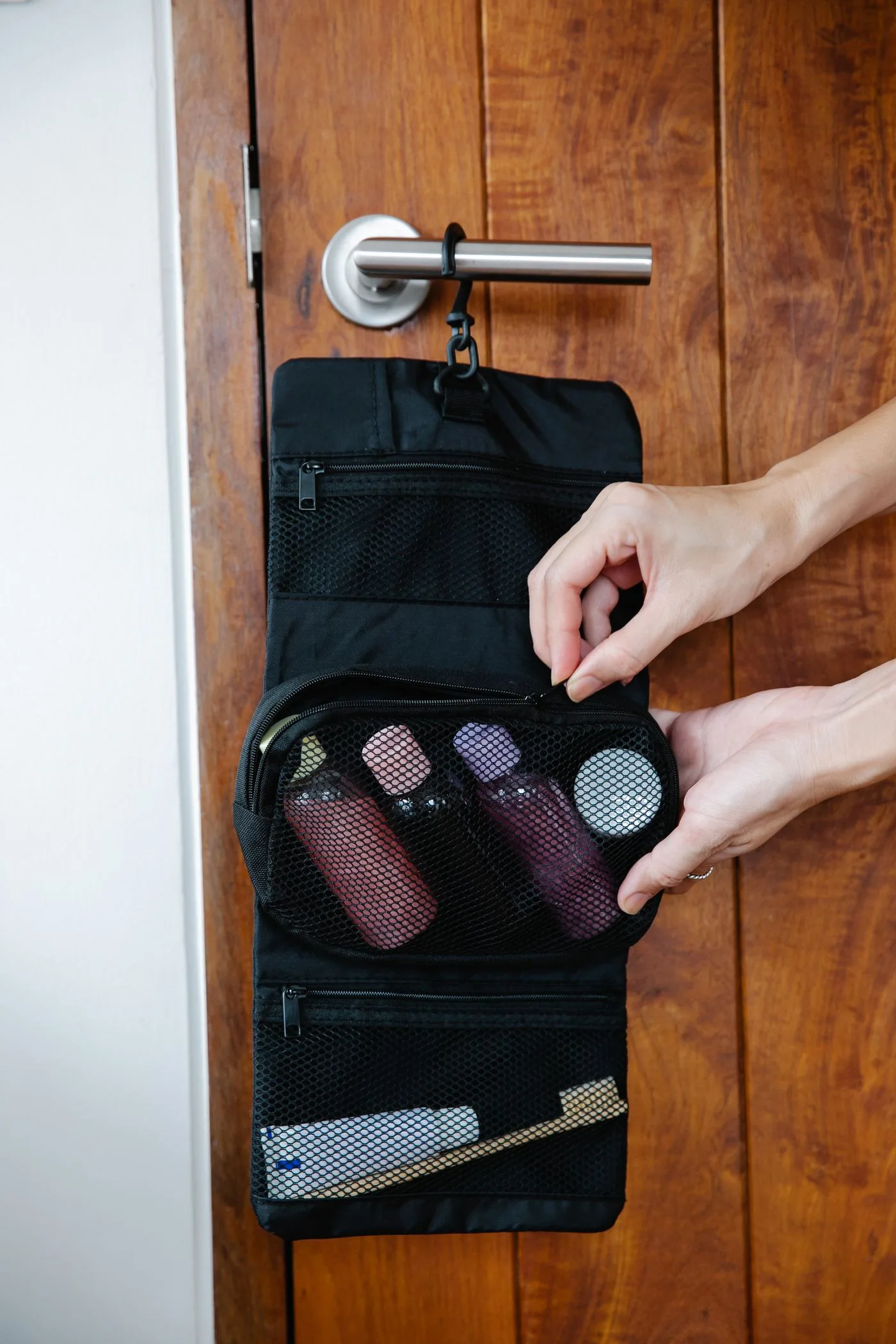
A toiletry bag may contain more parts than its outer silhouette suggests. A removable pouch, hanging component or detachable strap can become separated between travel and home storage. Before packing, identify what belongs to the particular bag and how those parts are intended to work. A clear set is easier to use than a collection of similar pieces with uncertain origins.
Establish the actual product set
Read the bag’s own product information and inspect the components you have. Compare them with the relevant description without assuming every accessory visible in a promotional photograph was included. Keep purchase information where it can be found if ownership or a missing part needs clarification.
Name the pieces in plain language. A detachable inner pouch and an external carrying strap have different roles even if both connect through small fastenings. Do not substitute an unrelated component because it appears to fit a similar opening.
Review condition before loading
Inspect accessible closures and attachment points without forcing them. A stuck zip or unfamiliar fastening deserves a pause and appropriate guidance. Packing more items into the bag rarely clarifies how a component is intended to operate.
Keep any unresolved piece outside the ready-to-pack group. If the bag cannot serve the intended role comfortably, consider a suitable existing alternative. The aim is an understandable travel arrangement, rather than proof that every component can be made useful on this particular journey.
Assign contents without hiding identity
Choose contents according to the trip and the product guidance for the belongings themselves. Preserve labels and relevant instructions. A smaller container or inner pocket should not make a product harder to identify when it is needed away from home.
Avoid treating every empty space as a requirement to add something. The bag needs to close and be used in its intended manner. A clear arrangement can leave unused space while keeping frequently needed items accessible without disturbing unrelated contents.
Keep detachable pieces together thoughtfully
During use, give any removed component a deliberate temporary place appropriate to the accommodation and item. A small pouch left among unfamiliar bathroom belongings can disappear into the final packing rush. Shared accommodation also makes product identity worth keeping clear.
Check relevant property guidance before using a hanging feature. A convenient handle does not by itself establish a suitable support. If hanging is unsuitable, choose an appropriate alternative arrangement rather than improvising a connection from unrelated fittings.
Restore the set after travel
Empty and review the bag at home, following care instructions for both the bag and its contents. Let any required care process finish before closing items into storage. Reunite the intended components and note a genuinely missing piece while the trip is still easy to remember.
Keep the resulting inventory modest: the actual bag, its included parts and any unresolved task. That information supports the next trip without creating a complicated packing system. A toiletry bag works more clearly when its identity survives every transition between bathroom, luggage and home storage.
Related reading
A Travel Toiletry Bag You Can Actually Find Things In, Organise Hand Luggage Around What You Need Next.