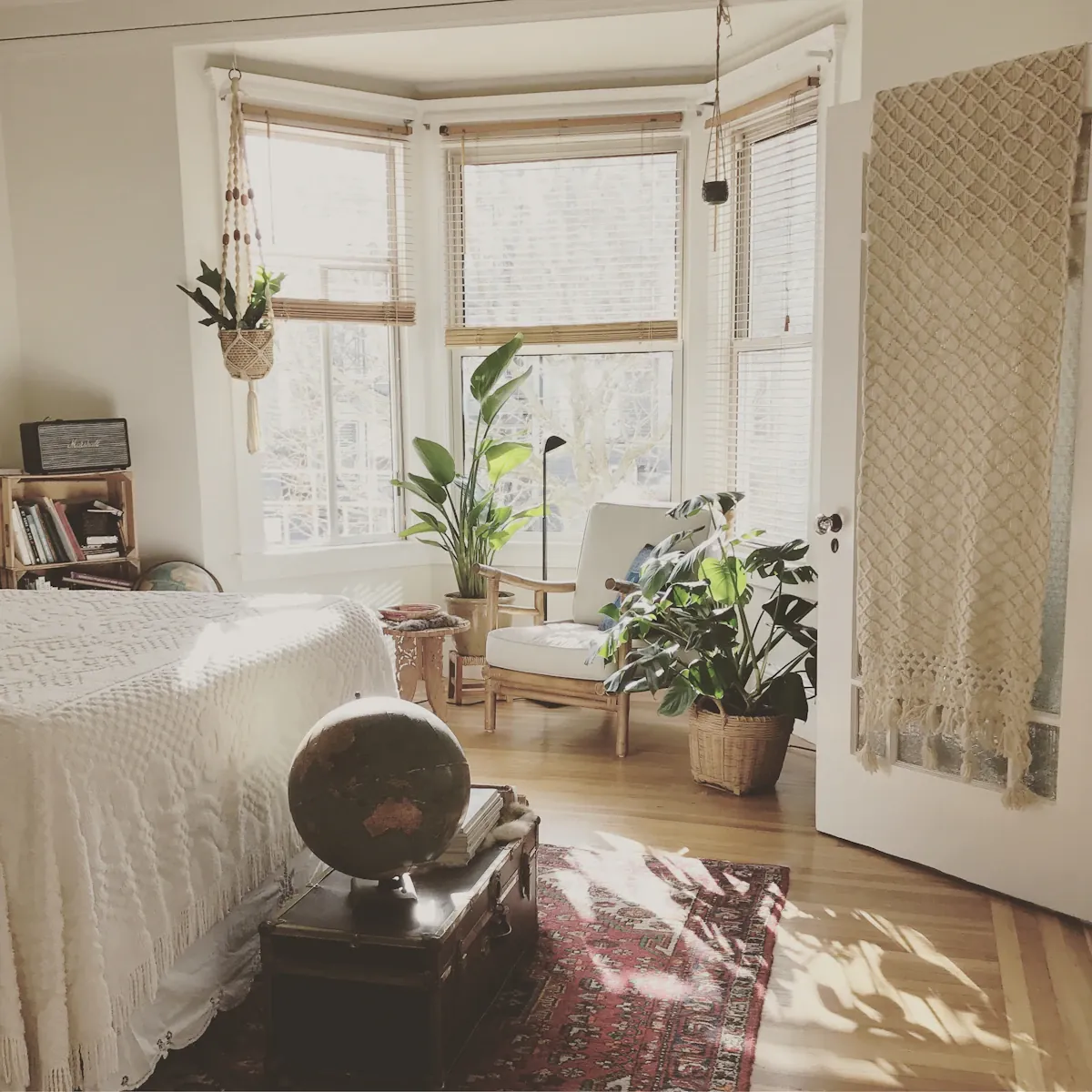
A chair by a window can make an ordinary reading pause feel appealing without becoming a dedicated room of its own. The practical question is how the pause ends. A book, glasses or another personal item can remain after you leave, gradually turning a shared corner into an unexplained collection. Plan a modest return route so the place can support reading and ordinary household life.
Choose one real session
Use a time when you genuinely expect to read and material already in use. A brief pause and a longer session can raise different needs. Keep the role realistic rather than buying a complete corner arrangement for an imagined daily habit.
Use the actual furniture in its intended manner and keep personal comfort central. A photograph of a chair among plants is an illustration, not a promise about conditions in your own room or another person's experience.
Identify what must pause nearby
Keep the current material identifiable rather than collecting several unrelated stacks. A borrowed book has an ownership and return context that should remain clear. A short private note can preserve a real next step without exposing unnecessary personal information.
Give other belongings separate appropriate places according to their product guidance. A book should not automatically become storage for glasses, papers or another object merely because it is close to the seat. Physical convenience does not establish a suitable role.
Keep the room's ordinary route visible
Review doors, windows and shared storage as they are actually used. A reading pause should not require everyone else to maintain an empty photographed scene. Another existing suitable surface may serve the belongings more clearly than adding a new stand.
Do not turn a decorative object into improvised furniture because it appears to have the right height. Keep the actual product and room information central rather than assigning a function from appearance alone.
End the session in a small sequence
Mark the reading place appropriately, return personal items to their understood locations and identify any genuine unfinished note. An unrelated receipt used temporarily as a marker should not lose its original purpose in the process.
If the book stays nearby for the next session, keep that a deliberate current-use decision. It should not imply that every object beside it has acquired the same permanent role. Shared space benefits from a clear modest agreement rather than invisible ownership assumptions.
Review what actually helped
Notice whether the pause worked at the real time and in the ordinary room. Daylight and household activity can change; one successful session does not establish a universal arrangement for every hour.
Keep a useful observation if it informs a later choice, but do not create a shopping gap from a decorative image alone. A clear ending allows a familiar chair to support reading without becoming a growing storage project, preserving the pleasant pause while giving the room back its ordinary life.
Related reading
A Bedside Place for the Book You Are Reading, A Better-Lit Rental Without Rewiring.