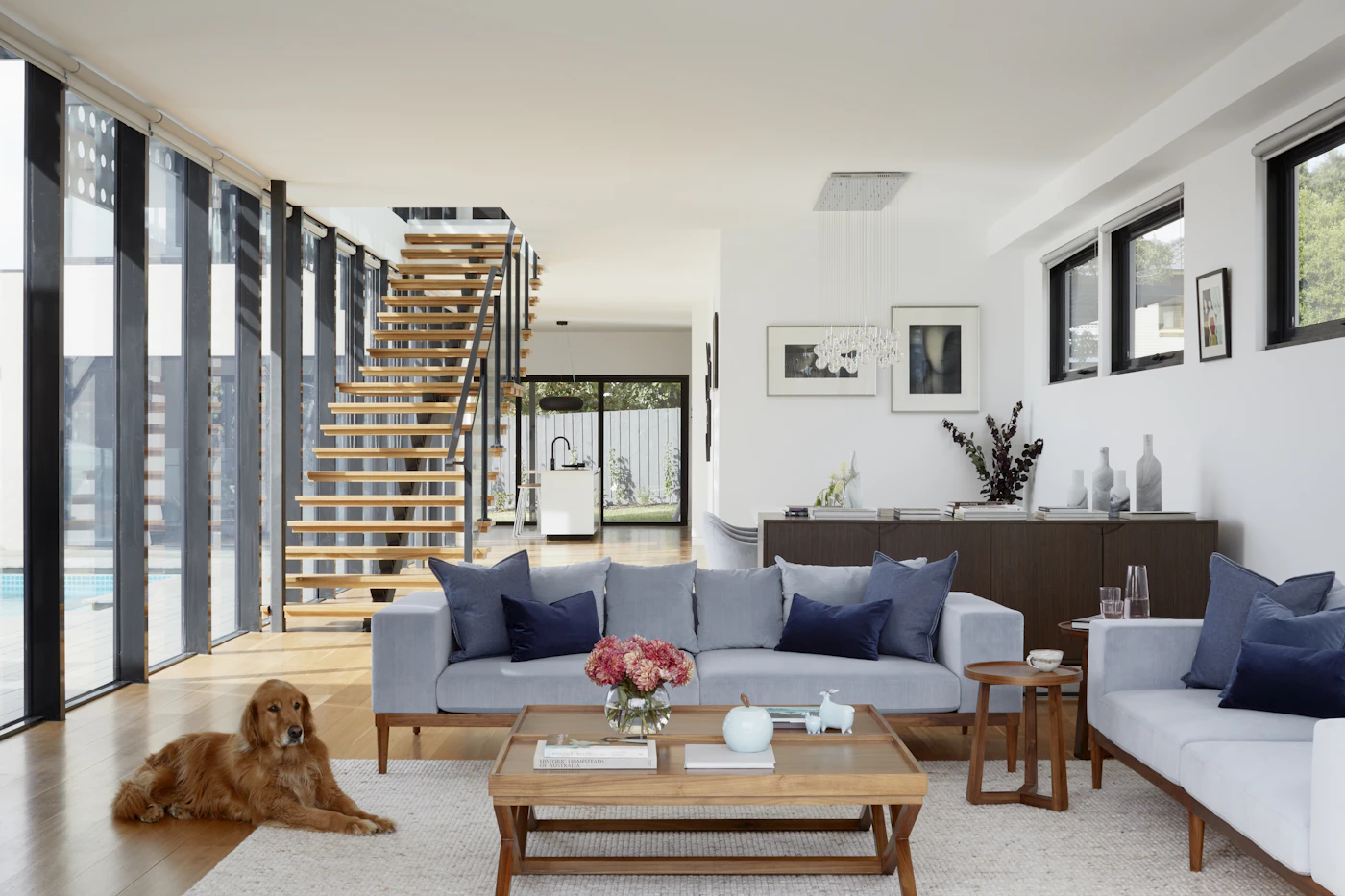
A coffee table can support reading, conversation and several other ordinary tasks during the same day. Its usefulness depends partly on how clearly the surface changes between them. A decorative group may look tidy while making every transition awkward. Start with the actual activities and the return places of the belongings involved, rather than assuming another tray or basket will explain the mixture.
Name the two uses that conflict
Choose a real pair of activities, such as keeping a current book nearby and clearing space for a shared household task. Avoid planning for every imagined occasion at once. A modest comparison is easier to understand and more likely to remain useful.
Review the actual furniture guidance and ordinary room route. An open living-room photograph can inspire a feeling of space without establishing capacity or placement for your own table. Keep doors, seating and shared access inside the decision.
Review the existing surface group
Separate objects genuinely used at the table from things that simply arrived there. A current book can have a local role; an unrelated receipt may need an action elsewhere. A tidy arrangement should not make those statuses interchangeable.
Keep ownership clear where several people use the room. Another person's object should not silently become part of a permanent decorative display. An ordinary plain explanation can be enough without creating a complicated household inventory.
Choose the temporary destination
Decide where the useful group goes during the table's other activity. The destination needs to suit the actual objects and should not merely transfer an obstruction to a chair or doorway. Use existing appropriate places before buying another container.
If a tray is relevant, read its guidance and keep the contents modest. A group that can be moved only after several loose pieces are removed may need simplification rather than a larger decorative tray. Do not create an artificial carrying test to prove a preferred product useful.
Preserve unfinished actions separately
Read papers before relocating them and name any real next step. An unexplained note under a book can lose its meaning while the room looks calmer. Keep the task connected to the actual item in its understood place.
An unfamiliar component deserves its own question rather than a guessed match with something nearby. Physical proximity or coordinated colour does not establish product identity. Preserve uncertainty while seeking the appropriate clarification.
Restore only what still belongs
After the shared activity, return the objects that genuinely serve the table's ordinary role. An item does not need to rejoin the group merely because it was there yesterday. Keep the arrangement small enough that its purpose remains clear.
Review the routine when an actual problem reappears rather than repeatedly styling an unchanged surface. A clear change of use gives the table a realistic shared role while preserving belongings and unfinished tasks, allowing existing furniture to support everyday life beyond one attractive living-room view.
Related reading
A Side Table within Comfortable Reach, How to Host a Board-Game Evening People Can Settle Into.