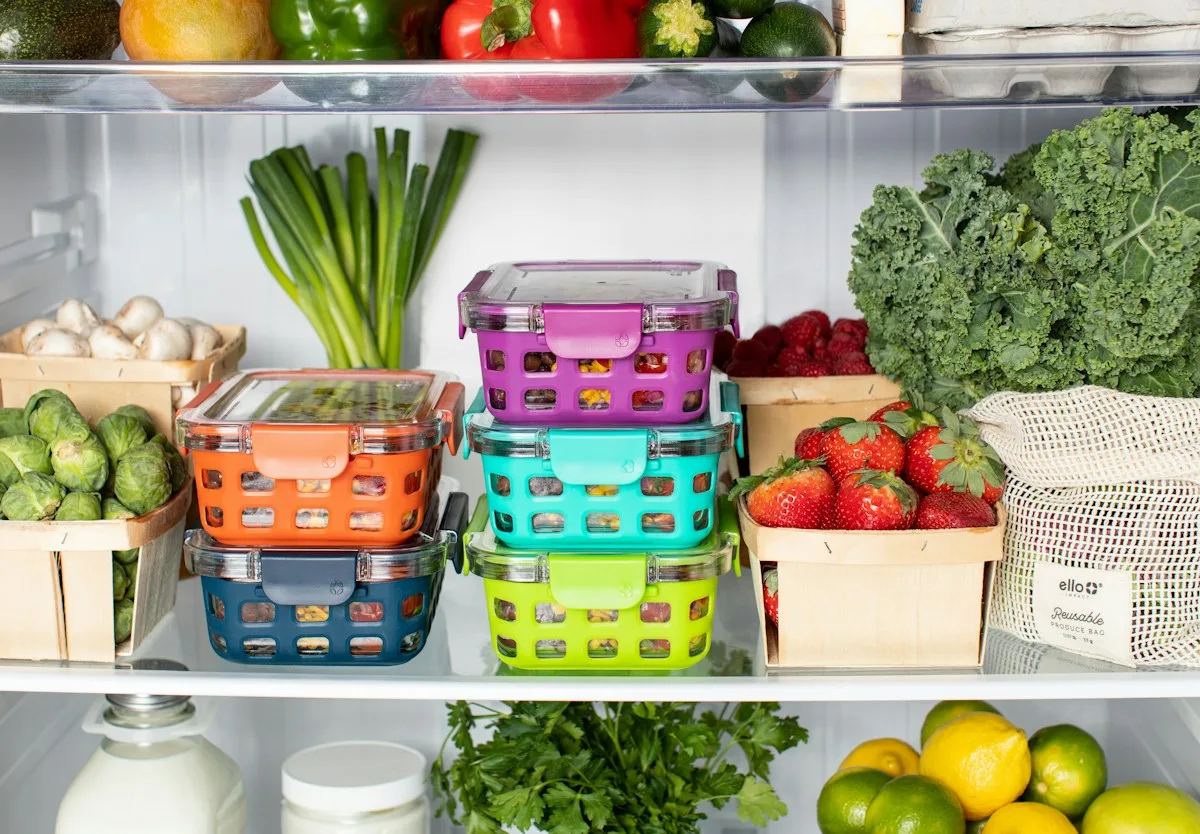
A refrigerator container can fit on a shelf while remaining awkward to use there. Its lid may need more room, a handle may project beyond the base or another item may block the ordinary removal route. Compare the complete working shape rather than only the empty footprint. The container and refrigerator's actual information still determine suitable use; a tidy storage image cannot establish the requirements of every food, vessel or appliance arrangement.
Identify the product and intended task
Name what the container is meant to hold and how it will be used through the actual food plan. Follow relevant product and food-handling guidance rather than assuming that a familiar shape is suitable for every ingredient.
Keep the selected model and version clear. A gallery may show different sizes or accessories together. Do not carry dimensions or a lid feature from one option into another simply because the colours match.
Include the full supplied shape
Look at the base, lid and any relevant projecting parts as a complete group. Preserve the product's stated dimensions and what they describe. A flat base rectangle alone may not represent the space occupied in ordinary use.
Distinguish the container's closed state from any appropriate opening or removal sequence. The task involves movement as well as storage. Keep that movement within the product's intended use instead of forcing a lid or fitting around a crowded shelf.
Read the actual refrigerator space
Use the appliance's relevant information and the actual suitable area available. Include the opening and approach, not only the space behind it. A container that cannot be removed normally has not answered the practical question.
Avoid treating a decorative arrangement of matching boxes as an instruction to block equipment features or ignore storage requirements. The real food and appliance needs remain more important than a continuous line of identical fronts.
Consider the empty return as well
Identify where the cleaned and appropriately prepared container will live between uses. Its lid and separate pieces need an understandable home without becoming an anonymous pile that is difficult to reassemble.
Try the existing suitable containers against the actual task before buying a whole set. One missing useful size is a different problem from a wish for every shelf to look coordinated. Keep the purchase tied to the former where that is the real need.
The final comparison should explain the product, complete state and movement being considered. A container can be attractive and still fail a particular working-space question. Keeping the real lid, access route and appropriate storage requirements visible allows the choice to serve the kitchen's routine instead of asking a photograph of empty boxes to stand in for ordinary use.
Related reading
Returning Cooking Pots and Lids after Dinner, Everyday Glasses with a Clear Cupboard Place.