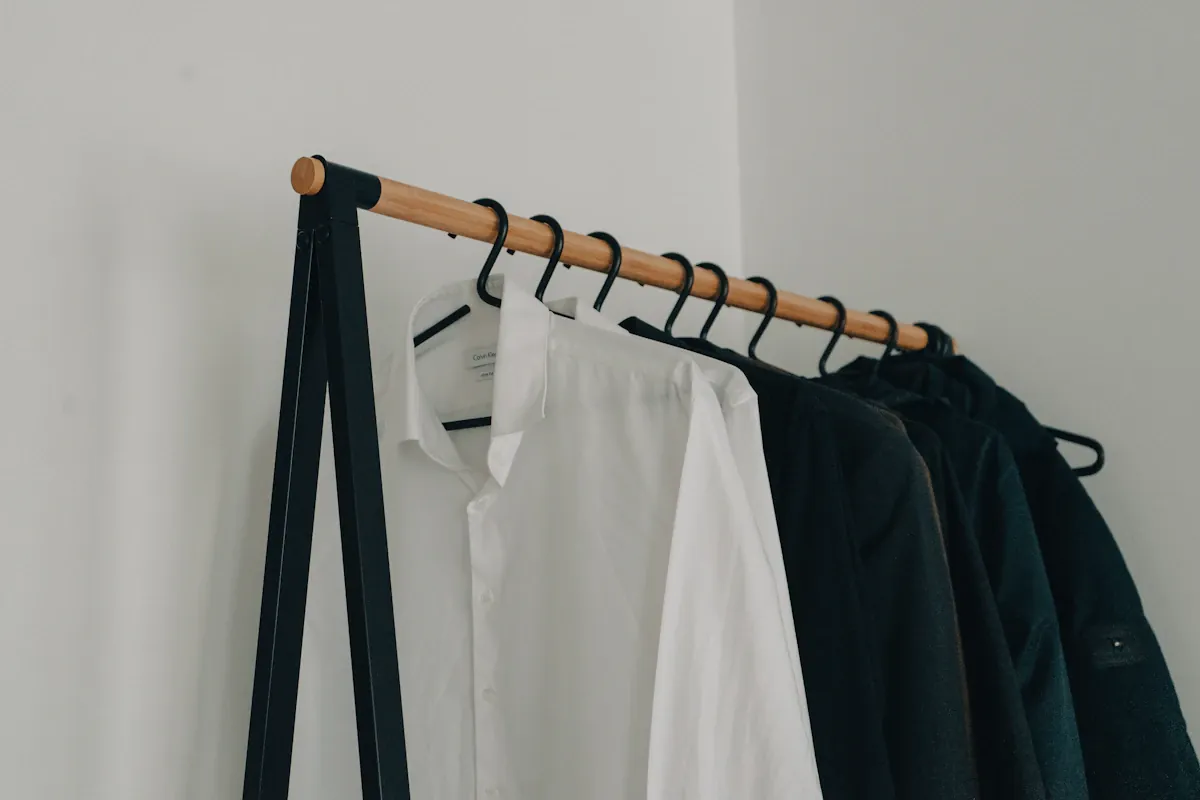
A soft woven shirt can offer the familiarity of a collar and buttons with a less crisp outline. Its drape changes how it tucks, layers and moves, so it should be tried differently from a structured office shirt. Start with trousers or a skirt already worn regularly. The goal is a useful relaxed combination, not a matching set bought because the shirt looks easy on a styled model.
Check the shoulders and arm movement
Let the shirt settle naturally, then reach forward and bend the elbows. A soft fabric can disguise pulling in a still view, especially beneath a jacket. Check seams and button line while moving. If it restricts the back or upper arms, compare a different cut rather than assuming the fluid appearance means the garment should be comfortable at any size.
Inspect coverage in suitable light
Wear the intended underlayer and view front, side and back in ordinary indoor light and daylight where available. A draping fabric may show seams or pocket lining differently from a crisp one. If another layer is needed, assess its warmth and comfort too. Do not build several new purchases around a shirt whose practical role was supposed to be simple warm-weather wear.
Try untucked before forcing a shape
An untucked soft shirt can create an easy line, especially where the hem is designed to fall freely. Compare a shallow front tuck if you want the waistband visible. A full tuck may bunch differently when seated, so check that separately. If the fabric collapses awkwardly at the waist, another hem arrangement or a different bottom may work better than tightening a belt around the whole combination.
Use collar and cuff details lightly
A softer collar may look better allowed to settle than pressed into a rigid shape. Roll or fold cuffs only if they stay comfortable and suit the outer layer. Repeatedly pushed-up sleeves can become another adjustment during errands or meals. The shirt can be worn as a complete top, or open over a suitable base where its shape allows. Test that version rather than assuming every buttoned shirt makes a convenient jacket.
Add the practical outside layer
Try the shirt beneath the coat or cardigan normally used. Check whether fabrics slide or catch and whether sleeves bunch. A fine woven top can be useful under knitwear, but a very full sleeve may need a more accommodating outer cut. Carry the bag too, because a strap can pull soft fabric toward the shoulder and change the neckline during walking.
Is soft fabric always easier to care for?
No. Read the exact composition, washing, drying and pressing guidance before buying. A fluid finish may still require care that does not suit your household routine. Do not infer fibre or heat tolerance from touch alone. Keep the shirt clean and stored as appropriate, unroll cuffs before cleaning and retain useful fitting notes. An easy appearance should be supported by a realistic maintenance plan.
Related reading
Continue with How to Buy Autumn Knitwear You Will Want to Care For and A Carry-On Outfit Capsule for a Short Trip With Mixed Plans. These existing guides provide a broader starting point for the related wardrobe, home or planning decision.