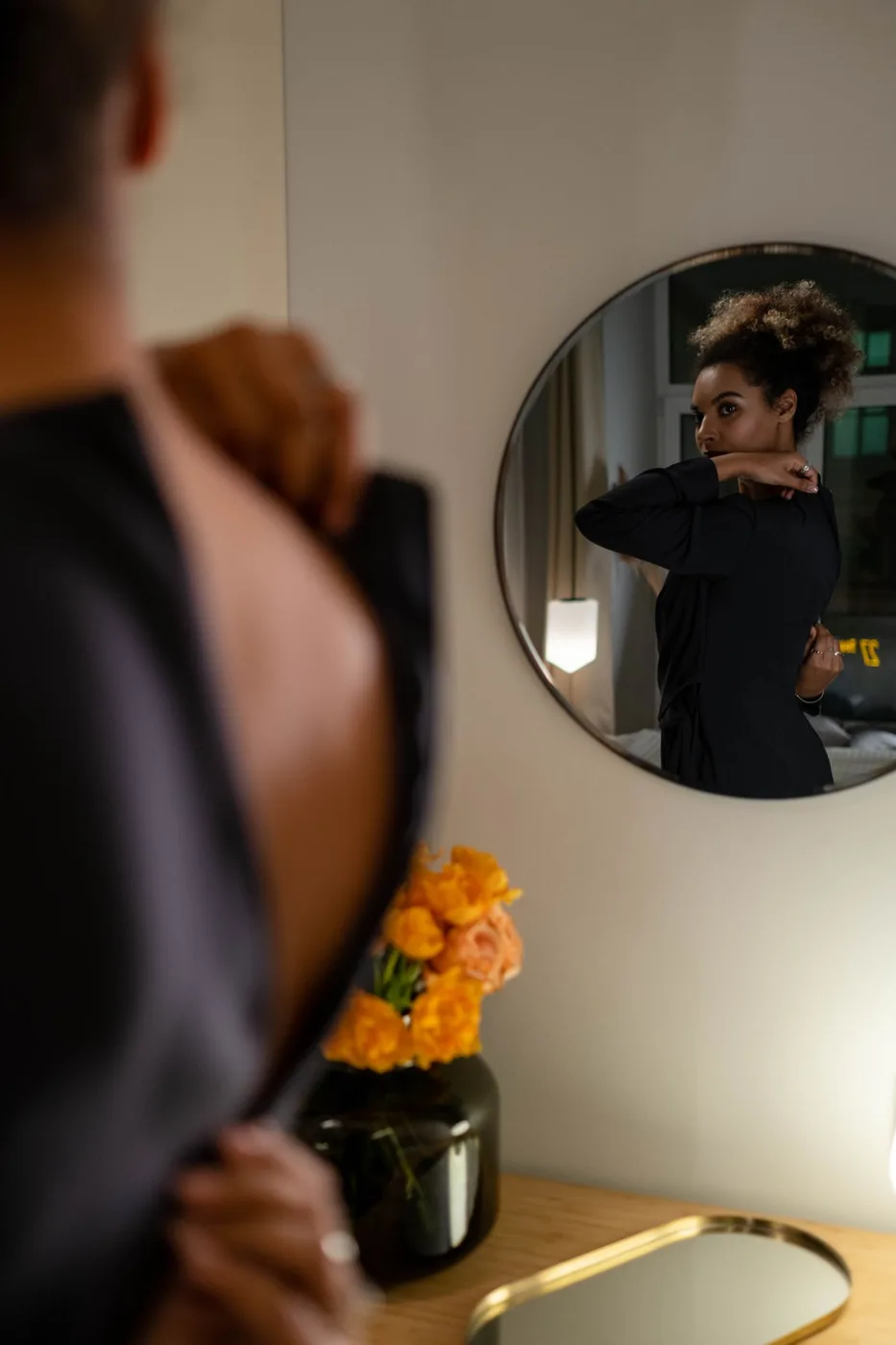
A mirror photograph can be a useful private record of an outfit while creating uncertainty about sides. A fastening or shoulder detail appears reflected, and an edited image may later be flipped again. Keep the photograph's role understandable before using it to compare product construction. An overall outfit impression and a precise account of which side holds a feature are different tasks, even when one image seems able to serve both.
Decide what the reference should answer
Name the purpose before taking the picture. A colour combination may only need the full outfit, while a question about an asymmetric detail needs a more explicit record. Do not ask one casual mirror image to establish every feature of the garment.
Where direction matters, use a clear description such as wearer's left. The word left alone can refer to the viewer, the person in the mirror or the photograph itself. A few precise words can prevent a later mistaken comparison.
Check the item outside the reflection
Look directly at the actual fastening, pocket or other feature. Preserve relevant garment information separately. A reflected view should not overrule a detail that can be established from the physical item.
Take an appropriate direct reference of the particular area if needed. Keep enough surrounding garment visible to locate it. A tight crop can solve the reflection problem while creating a different identification problem.
Keep editing choices visible
Cropping can remove irrelevant surroundings without changing the direction of the clothes. Flipping changes apparent sides, so note that choice where the image may be used later to answer a construction question.
Do not reverse an entire photograph only to make a graphic readable without considering what else changes. A slogan may now read normally while another asymmetric feature appears in a different position from the original reference.
Preserve the real outfit context
Keep the image with the names of the actual pieces and the question it answered. A simple private note can distinguish a successful colour pairing from a fit concern or a product inquiry. Those are related observations, not identical records.
Review the mirror's background before sharing. Reflections can include people, screens or private papers outside the subject's immediate attention. An outfit reference does not need those details to remain useful.
The final record can be plain and practical. It should make clear what is reflected, what was checked directly and which conclusion the picture supports. That allows the mirror photograph to preserve an appealing outfit without creating a false memory of the garment's actual construction or becoming evidence for a side detail it never documented reliably.
Related reading
Read a Jeans Listing beyond the Cropped Model View, Pockets in Everyday Clothes: Test Them with the Items You Carry.