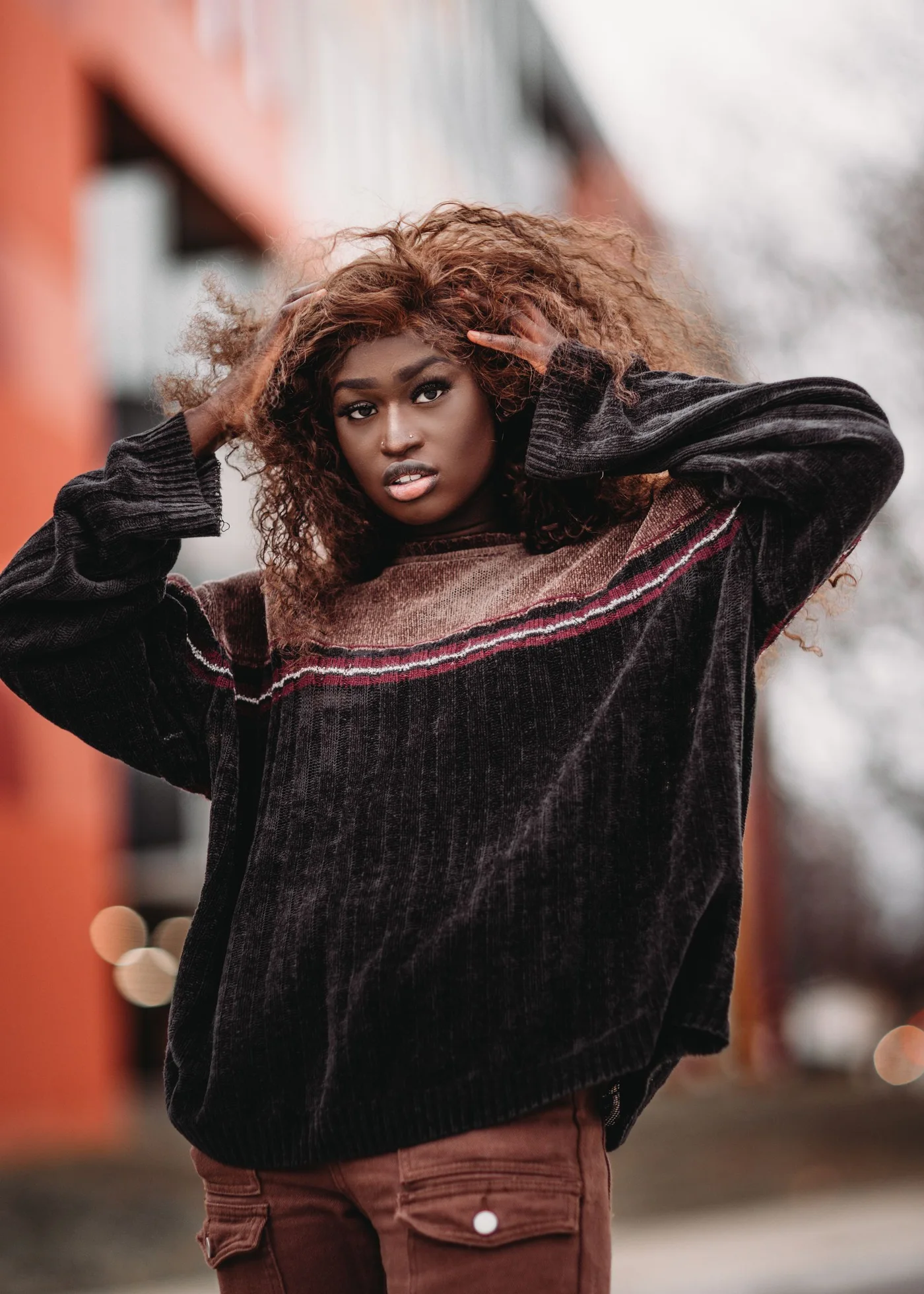
A textured top can bring enough visual interest to an outfit without demanding another patterned garment. A familiar plain outer layer offers one way to wear it, but the relationship needs more than an appealing colour combination. Look at the actual surfaces, sleeves and openings together before deciding whether the outfit earns a place in ordinary dressing.
Identify the intended arrangement
Choose a top and outer layer you already own and understand. Read relevant care information before placing unfamiliar surfaces together. Lay them out without stretching either garment and decide whether the outer layer is intended to remain open, close comfortably, or come off during the day.
This small decision establishes what the top must do. A neckline visible through an open jacket has a different visual role from a narrow strip beneath a closed cardigan. Keep your preference specific to these garments rather than making a general rule about textured clothing.
Look at the sleeve relationship
Dress in a suitable space and notice where each sleeve ends. Check whether the inner cuff remains where you intend and whether the outer sleeve accommodates it comfortably. Do not push a delicate sleeve through a tight opening to imitate a styled photograph.
If the pairing needs constant correction before you have left the room, consider another existing layer. A slightly different sleeve shape may offer a simpler arrangement. The useful comparison concerns the construction you actually have, not an imagined version of the first jacket with more room.
Review the opening and visible texture
Observe the outfit at an ordinary viewing distance. Decide how much of the top you want to show, including the neckline and lower edge. A small area of texture may feel sufficient; another arrangement may suit a wider visible panel. Neither choice establishes a universal proportion.
Check the edges where the garments meet. A fastening, seam or decorative surface can change what appears to be a simple pairing. Follow maker guidance for any uncertainty about contact or care rather than assuming that a plain-looking layer has a featureless inner surface.
Include the day’s transitions
Sit and stand in the outfit, then remove the outer layer in the way you expect to do indoors. Confirm that the top works independently with the rest of the clothing. An appealing layered look can become less useful if its base arrangement has never been considered.
Bring familiar trousers or a skirt, shoes and the intended bag into the review. Keep accessories proportionate to your actual needs. You do not need to buy another texture merely to explain the one already present.
Remember the workable combination
A brief private note naming the garments and intended opening can preserve a useful pairing. Record a genuine limitation if it matters, such as preferring the combination for a mostly indoor day. After wearing, return both pieces through their appropriate care routines. The result is a practical outfit reference grounded in actual clothing, with enough flexibility for personal preference to change.
Related reading
How to Buy Autumn Knitwear You Will Want to Care For, A Winter Capsule That Works Beyond the Perfect Outfit Photo.